Leeches of the Guadiana reach their Plaza Alta
The Plaza Alta and the surroundings of the Alcazaba summarize a good part of the transformation experienced by the old town of Badajoz. Recover a historical space, bring it back to life and project it into the present without erasing the traces of its identity. Something similar has been achieved Guadiana leeches with popular music from Extremadura. The band has renewed its sounds and codes without detaching them from the land from which they come, turning tradition into a living material capable of connecting with audiences of different generations.
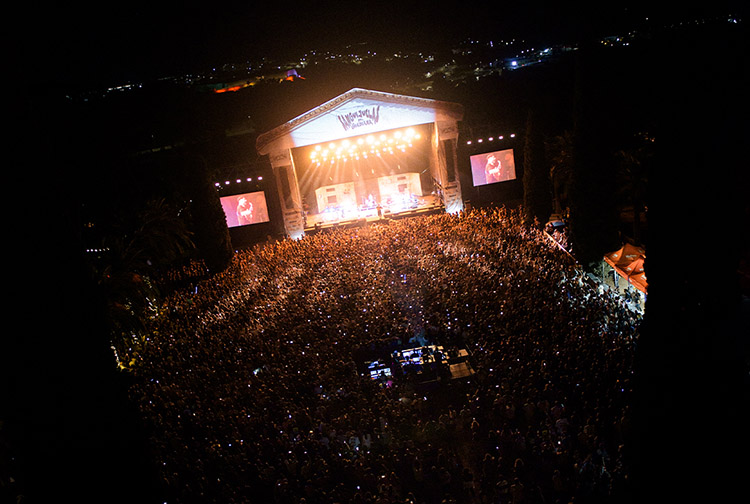
On July 24 and 25, this relationship between memory and present found its natural setting in the Alcazaba of Badajoz. Guadiana leeches gathered 16,000 attendees in two nights that transformed the historic site into a massive celebration of Extremaduran identity. Young people, entire families, rock veterans, indie audiences, folk fans and the curious shared two days in which differences disappeared to sing in unison. The production accompanied the call with a large-format montage in sound and lighting, maintaining the closeness and authenticity of the band.
In just two years, the band has gone from being presented as an emerging project at the MUM – Extremadura Professional Music Conference – to becoming one of the most important musical phenomena to emerge in the region during the last decade. They have achieved something within the reach of very few artists. Make being from a town, being from Extremadura, be experienced again as a source of pride. His motto, Verbena in comea, has ceased to be a simple slogan and has become an authentic way of understanding popular music. But Sanguijuelas del Guadiana represents much more than its success in attracting people. It represents effort, enthusiasm and the ability to transform difficulties into hope. It shows that from a municipality of barely a thousand inhabitants, songs can emerge capable of moving thousands of people and connecting very different generations under the same feeling.
The first day started with the performance of The Kaita and Juan Vargastwo references of Extremaduran flamenco whose presence built a bridge between tradition and the new musical scene before the appearance of Guadiana leeches. From the first chord it was clear that this was not going to be a conventional concert. The band built a repertoire in which emotion and celebration always walked hand in hand. “100 poppies” turned the Alcazaba into an immense collective choir. “I don’t care” made a dedicated audience jump and “Llevadme a mi Extremadura” caused one of the most exciting moments of the night, already becoming one of the great anthems of his followers. The connection between stage and audience was absolute. Each song found an immediate response among thousands of throats that seemed to know every word. The concert confirmed that Sanguijuelas now transcends the strictly musical to become a shared celebration of Extremaduran roots. The night was completed with performances by three of the most representative bands of the new Extremaduran alternative scene: Malablood, KMKR and Tobacconist 72. A successful bet to bring together different generations of musicians who are promoting the excellent creative moment that the region is experiencing on the same bill.
If Friday was a celebration, Saturday marked the consecration of a phenomenon that already transcends Extremadura. That was the first date announced and it sold out all the tickets in just a few hours, generating an expectation rarely seen in the city. The day began Bag of Flies, a project that makes this new generation of Extremaduran artists understand well contemporary but they already turn their songs into stories close to their land.
With the protagonists back on stage as the concert progressed, the repertoire grew in excitement. “La Brecha” sounded powerful, with that popular festival character filtered by the energy of urban rock. “Jaribe” once again demonstrated why it has become one of the band’s most sung songs, thanks to an infectious chorus and guitars that immediately connect with the audience. The intensity continued to increase with “Yesca”, which ended up emotionally igniting the Alcazaba and paving the way for the big moment of the night. “Revolá”, performed with Celia Romero. What happened then is difficult to describe in words. Thousands of people, of very different ages, backgrounds and musical tastes, sang in unison as if that song had always been part of their lives. It was the moment in which the concert stopped belonging solely to the band and became a kind of collective emotional heritage. Another unforgettable moment came with the appearance of The Kaitawho returned to the stage to perform a powerful rock version of “Soy de Badajoz.” A collaboration as unexpected as it was exciting that unleashed one of the biggest applauses of the weekend and symbolized the embrace between tradition and new Extremaduran popular music. The farewell came with the chorus that gave meaning to these two nights. “I swear I’ll be back.” It didn’t sound like a simple farewell phrase, but rather like a promise shared between the band and an audience that already feels these songs as part of their own history.
When the lights went out, the feeling was unanimous. What was experienced during the weekend went far beyond a successful call. It was the confirmation that Extremadura is going through one of the most fertile moments of its recent music scene and that Sanguijuelas del Guadiana has achieved something reserved for very few artists. Turn a concert into a shared experience, a repertoire into a collection of popular hymns and a band into one of the musical symbols of a new generation. Bird, Guadiana Leeches.