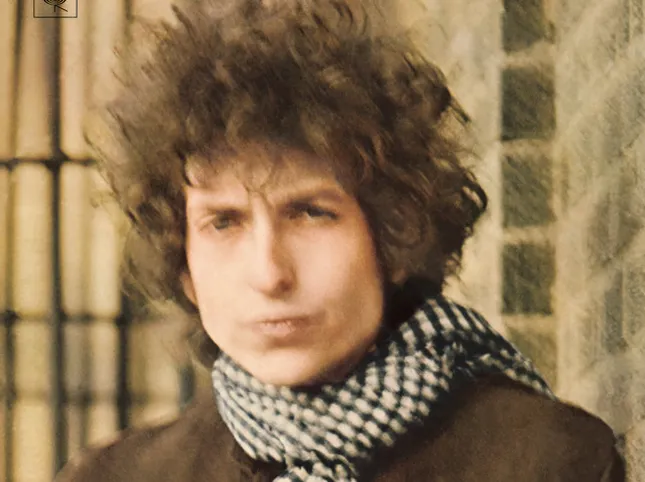
“Blonde on Blonde”: when Dylan stopped time
“When you are young you think that time moves forward. At 80 you know that this is not the case: time stands still. We are the ones who move”, wrote Bob Dylan in recent days, in an editorial in the New York Times, published – together with those of other public figures – on the days in which President Trump crosses the threshold.
Dylan is 85 years old, and it is quite impressive to think that this album makes him 60. It is even more impressive to think that between ’65 and ’66 Dylan, at 25 years old, perhaps had the “streak” that changed the course of music and beyond. A positive streak, a competitive trance – to use sporting jargon – which led him in 18 months to record and publish “Bringing It All Back Home”, “Highway 61 Revisited” and “Blonde on Blonde”, released on June 20, 1966. A moment in which the time of music stopped, while Dylan continued to move, before being stopped by the motorcycle accident that diverted his career, in July ’66, and with which “A Complete Unknown”, the biopic, also ends.
The trilogy that changed music
Bob Dylan has recorded a string of masterpieces even in the most recent phases of his career: “Rough and Rowdy Ways” a few years ago, but also “Love and Theft” at the beginning of the millennium, “Time Out of Mind” in the 90s, “Oh Mercy” in the 80s. We’re not talking about the ’70s (“Blood on the Tracks”) and we’re obviously not talking about all the twists, turns, detours, questionable albums in between. But this trilogy marked a real musical revolution, the transition from folk to rock, from acoustic to electric guitars, the breaking of every pre-constructed pattern. Dylan kept moving, always one step ahead, while being accused of being a Judas who had betrayed the authenticity of the protest song. “I don’t believe you, you’re a liar. Play it fucking loud”, as he said in that famous concert in Manchester when they shouted at him from the audience.
This trilogy includes some of the most classic classics of Dylan’s repertoire of all time, from “Mr. Tambourine Man” to “Like a Rolling Stone” to “Just Like a Woman”, just to pick a song from each of the three albums. And don’t blame us if we mentioned these and not others, because we know that this is an arbitrary choice.
Because “Blonde on Blonde” is the classic of classics
There are a few reasons that argue in favor of “Blonde on Blonde” as a “classic of classics” in Dylan’s discography. The first is, precisely, its position as the climax of this absurd period for a common mortal musician. The second is dictated by historical reasons: it is one of the first double albums in the history of rock; one song, “Sad Eyed Lady of the Lowlands”, on vinyl takes up an entire side on its own.
The third is linked to the first, but is strictly musical: this album is an unstoppable river of sounds, words, suggestions reworked in an absolutely revolutionary way. Dylan, in these 14 songs, has rewritten the history of rock, fusing folk, blues, country and rock in a new and personal language. Recorded between New York and Nashville, with the help of Robbie Robertson’s Hawks, his hometown band that would later become simply The Band, the album builds a rich, mobile and elusive sound, destined to remain immortal, like The Band par excellence, in fact.
The fourth reason is the songs, sung in the most Dylan-esque way possible: a drawling voice and an absolutely unique and personal interpretation. The songs, we were saying: from the aforementioned “Just Like a Woman”, to “I Want You”, from “Visions of Johanna” to “Stuck Inside of Mobile with the Memphis Blues Again”, there is almost nothing wrong with this album.
Manchester, the accident and the legend
Some of the most well-known and legendary moments of Dylan’s biography occurred around the publication of “Blonde on Blonde”: the tour in Great Britain that gave rise to the famous protest of the “electric turn”, with the concert at the Free Trade Hall in Manchester, where he was accused of being Judas, on 17 May, a month before the album’s release – although for a long time it was thought that it all took place at the Royal Albert Hall, due to a bootleg. The serious motorbike accident in July ’66, the decision to withdraw from public life for some time, the recording of the “Basement Tapes” (which saw the public light only in the ’70s and which Dylan is rediscovering in his latest tour) and the return with “John Wesley Harding” at the end of 1967, a record more rooted in country than in rock.
An album out of time
Rivers of ink have been spilled on these events by Dylanologists far more authoritative than myself. Beyond any critical and historical judgement, however, the beauty of this album remains intact decades later: listening to it again in its original form, on a double vinyl with that blurry photo on the cover, is an unparalleled musical joy.
Maybe Dylan was right: time isn’t going anywhere. Sixty years later, these songs are still there. Time stopped, Dylan kept moving.