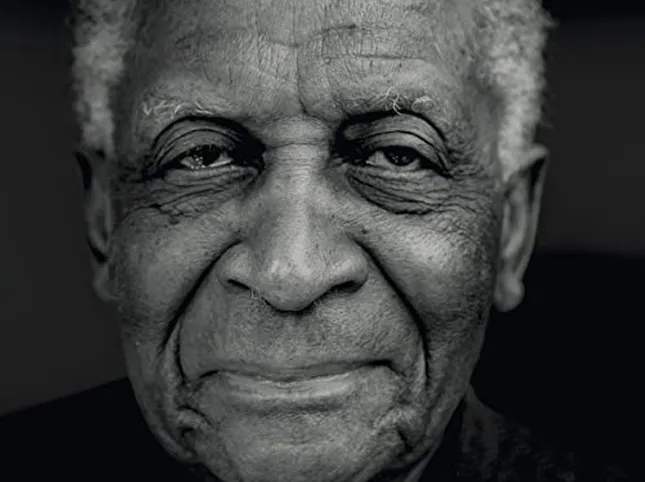
Farewell to jazz pianist Abdullah Ibrahim
The South African jazz pianist Abdullah Ibrahim he died at the age of 91, as announced in a statement from his family. “He passed away peacefully, surrounded by his family in Germany, after a short illness.” The South African president Cyril Ramaphosa paid tribute to him by declaring that his “creations paid homage to the South Africa that shaped his political commitment and his musical genius. He enriched our lives with his musical talent and his commitment to making the world a better place.”
Adolph Johannes Brandthis is the musician’s real name, began composing on the piano at the age of seven. His career spanned eighty years and was dotted with dozens of recordings. Among these, the song “Mannenberg” from 1974, one of his most famous compositions, which later became a symbol of the struggle against the white minority regime in South Africa and against apartheid.
Ibrahim, initially known on stage as
Dollar Brand
changed his name after converting to Islam in the late 1960s. As a teenager, the pianist played in a swing band and then in a sextet called
Jazz Epistles
which also included another South African jazz great,
Hugh Masekela
. With the tightening of apartheid, which began to be legally enforced in 1948, jazz music, seen as countercultural and encouraging racial mixing, was opposed. The political situation in South Africa led to the dissolution of the group and Ibrahim moved to Switzerland.
Duke Ellington
he listened to him and brought him to the United States. Gradually, his distinctive style began to emerge: a music that recalled the sounds of South Africa and blended the vocal and harmonic traditions of his country with the rhythmic sense and improvisation of jazz. Despite living outside South Africa, he never forgot his roots and made frequent trips to the country to perform and record. His last live appearance was less than three months ago, at the Cape Town International Jazz Festival, “where he once again captivated audiences with the artistry, grace and profound musical vision that characterized his work”, reads the family statement.