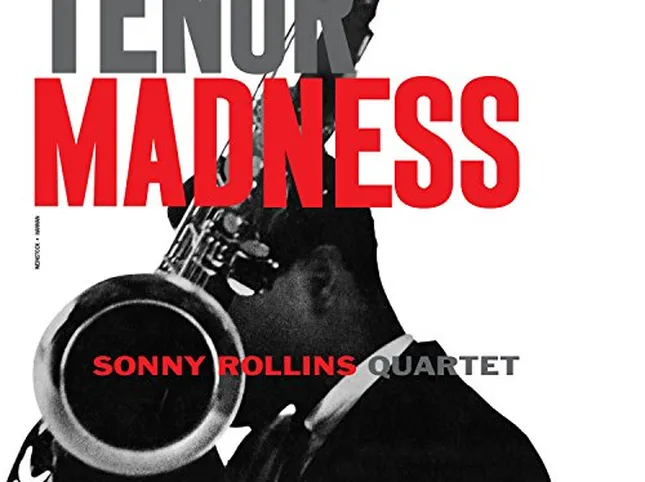
Sonny Rollins and John Coltrane wrote the story in 12 minutes
The death of Sonny Rollins it’s a wound that jazz will have to deal with for a long time. He’s gone a titan of tenor saxthe last great witness of the golden age of modern jazz, the last survivor of the 57 musicians of the historic photograph A Great Day in Harlem from 1958.
Theodore Walter “Sonny” Rollins was for over seven decades the living embodiment of jazz improvisation in its purest and absolute form. Universally known as the Saxophone Colossus — from the title of his historic 1956 masterpiece — Rollins redefined the vocabulary of tenor sax and hard bop through monumental sound, impeccable rhythmic mastery and marked expressive irony.
While most musicians of his era focused on speed or abstract harmonic complexity, Rollins always stood out as an exceptional thematic architect: he had the unique ability to take a very simple melodic fragment, sometimes even a popular song or a calypso motif (as in the splendid St. Thomas), and then dismantled it, interrogated it and reconstructed it live in fluvial and narrative solos.
Equipped with fierce intellectual honesty and self-criticism, Rollins has never stopped seeking perfection, even going so far as to temporarily withdraw from the scene at the moment of greatest success in order to study in solitude. His passing closes an unrepeatable era, but his legacy remains engraved in history – starting from the unrepeatable and generous close comparison with John Coltrane.
A historic “duel”.
The history of jazz is dotted with great dualisms (Coleman Hawkins and Lester Young, Charlie Parker and Dizzy Gillespie, Miles Davis and Chet Baker, Duke Ellington and Count Basie), but the comparison between Sonny Rollins and John Coltrane represents something deeper than a simple rivalry. It is the story of two diametrically opposed approaches to improvisation and the sound of the tenor saxophone, capable of push each other to absolute heights.
We are in the mid-50s. The tenor sax is the dominant instrument in modern jazz. On the one hand there is Sonny Rollinsthe “Colossus”, already widely recognized as the most brilliant, ironic and technically gifted saxophonist of his generation. On the other there is John Coltranea late-breaking talent, who is finding his definitive voice in Miles Davis’ quintet through an obsessive and almost ascetic search.
The only meeting documented on tape between the two giants occurred on May 24, 1956 at Van Gelder Studios in New Jersey. Rollins, for his new album as bandleader, borrowed the entire rhythm section of Miles Davis’ quintet: Red Garland on piano, Paul Chambers on double bass and Philly Joe Jones on drums. On just one song, a blues in B flat, he also invited Davis’ other saxophonist to play: Coltrane, in fact.
The song, which gave the album its title Tenor Madnessis a 12+ minute jam session that captures the essence of their dynamic. More than a duel to the death, it is a heated conversation. Although both have common roots (especially the enormous influence of the pioneer Coleman Hawkins), their musical philosophies develop in opposite directions. Rollins opens with his full, confident sound, playing with the rhythm and building the melody with iron logic. When Coltrane enters, the contrast is immediate: his tone is more penetrating, urgent, driven by an almost feverish need to explore the harmonic grid. In the chase finals – the exchange of alternating beats between the two saxes – the tension rises, but their different musical breath remains unmistakable.
Beyond the rivalry
In the years immediately following Tenor Madness, Coltrane’s rise was meteoric. While Coltrane released masterpieces that pushed Western harmony to the limit such as Giant Steps (1959) and reinvented modal jazz, Rollins began to feel a strong internal pressure. Coltrane’s creative explosion, combined with the arrival of Ornette Coleman’s avant-garde free jazz, pushed Rollins to take a drastic step.
At the height of his success, Rollins retired from the stage in 1959. For over two years he stopped performing in public, going every day to the Williamsburg Bridge in New York to practice in total solitudebraving the winds and noises of city traffic to redefine their sound. He returned in 1962 to record the album TheBridgereinvigorated and proud of his melodic approach.
Rollins understood that there was no point in chasing Coltrane’s harmonic density. While Coltrane continued his ascetic search that would lead him to the totally free and spiritual expression of his last years before his premature death in 1967, Rollins consolidated his status as solid and titanic improvisercapable of holding entire concerts improvising freely, relying solely on the strength of his melodic ingenuity.
Talking about rivalry in a negative or competitive sense is misleading: there was immense respect between the two, so much so that years later Rollins would define Coltrane as “a beautiful human being“. More than antagonists, they were two sides of the same coin: Coltrane used the saxophone to look towards the infinite seeking transcendence, while Rollins used it to root us in earthly life, showing us the intelligence, irony and pure joy of spontaneous invention.