Sixty years ago the legend of The Doors began at the Whiskey a Go Go
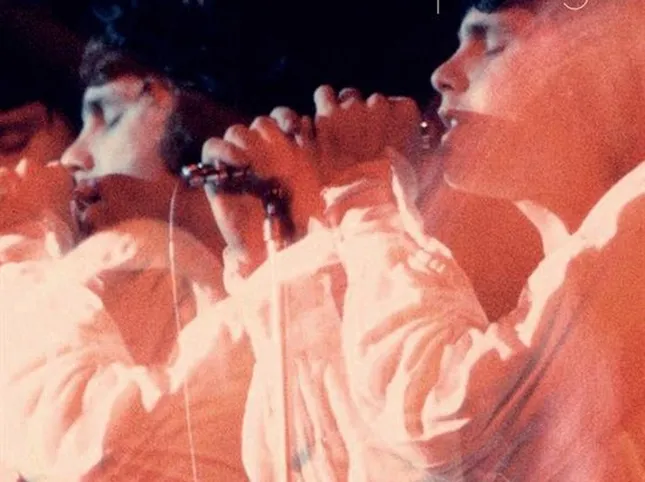
“At that time, Whiskey a Go Go was going through a transition phase. At the sides of the stage there were still cages for the go-go girls: that was more or less the time of Johnny Rivers. We, on the other hand, were somehow kicking off the psychedelic era.” In memory of John Densmore there is all the photography of an unrepeatable moment of American music. Sixty years ago, the May 23, 1966the Doors began theirs residency at Whiskey a Go Go in Los Angeles and within a few weeks that little club on the Sunset Strip would become the laboratory where Jim Morrison, Ray Manzarek, Robby Krieger and John Densmore would transformed a still immature group into one of the most important bands in the history of rock. In that venue with just five hundred people, the Doors refined their language, expanded the songs, experimented with blues, jazz and psychedelia and brought to the stage a theatrical tension that American rock had not yet seen in that form. Their relationship at the Whiskey a Go Go lasted only three months. They were enough to become legend.
The history of Whiskey a Go Go
When the Whiskey a Go Go opened in January 1964the Sunset Strip was becoming the nerve center of America’s new youth culture. The club founded by Elmer Valentine, Phil Tanzini, Shelly Davis and Theodore Flier took inspiration from French discos and initially seemed closer to the world of nightclubs than to that of rock. Go-go girls danced in cages suspended at the sides of the stage, DJs played records between sets and the audience was looking above all for fun and entertainment. Then something quickly changed.
The Whiskey began hosting live bands and quickly became the meeting point of the new Los Angeles scene. On one side there were the musicians who were changing American rock, on the other the actors, artists and symbolic figures of the counterculture who crowded the booths of the venue. It was the place where you could see Buffalo Springfield, The Byrds, Love or Van Morrison’s Them in front of an audience that could include Steve McQueen, Warren Beatty, Timothy Leary or Andy Warhol. The Whiskey a Go Go was not just a club. It was the point where American rock stopped being club entertainment and began to transform into a cultural language.
The Doors arrived there after months spent at London Foga much less prestigious club where they had learned to stand on stage for hours every night. It was there that the group began to lengthen the songs and work on the improvisations that would later become central to their musical identity. When the Whiskey called them as house bandthe feeling was that something new was taking shape.
He was also reminded of it Mario Maglierihistoric owner of the club and key figure on the Sunset Strip:
“I remember the Doors when they came here. Ray Manzarek, Jim Morrison… when they first came in it almost sounded like carnival music, but I liked it. My son really liked it and I appreciated that music too.”
The story of the Doors at Whiskey a Go Go
Between May and August 1966 the Doors played virtually every night at the Whiskey a Go Gooften two sets a night, opening for established artists and slowly building an ever-growing reputation in Los Angeles. In those months the group developed the material that would later end up in the first eponymous albumbut above all he learned to control the stage and the audience. Their performances were still dirty, instinctive and open to improvisationbut for this very reason they seemed alive in a different way than any other band of the period.
The setlists mixed original material and reinterpreted blues classics in a psychedelic key. On a typical evening in July 1966 the Doors might open with “Break On Through”, “Take It As It Comes” and “Moonlight Drive”, go through “Twentieth Century Fox”, “Unhappy Girl” and “When The Music’s Over”, and then slip in covers like “Money”, “Little Red Rooster”, “Gloria”, “In The Midnight Hour” or “Crawling King Snake”. Inside those sets you could already imagine everything that the Doors would become. The hypnotic blues of Robby Krieger, the liquid keyboards of Ray Manzarek, the jazzy drumming of Densmore and above all Jim Morrison’s stage presence were transforming the group into something completely different from the American rock of the time.
Ray Manzarek remembered those days like this:
“Our very first week at the Whiskey a Go Go had Van Morrison’s Them on stage at the same time and Jim Morrison with The Doors at the Whiskey a Go Go. And I don’t even want to tell you how much it cost to get in… basically nothing, you know? A couple of dollars for entry and a drink, and you could see Van Morrison with Them and Jim Morrison with the Doors. On the last night we all jammed together. We played Gloria. The two Morrisons singing Gloria, man… I won’t forget it never.”
The Whiskey quickly became the perfect place for The Doors to grow because it allowed the band to play for hours in front of a different audience every night. There were the regulars of the Strip, the curious, the hippies, the insiders, but also musicians who carefully observed that still unknown group. The Doors used that stage as an open laboratory. Every evening they modified arrangements, lengthened endings, experimented with new improvisations and pushed the theatrical tension of their performances further and further forward.
John Densmore summed up the spirit of that period better than anyone else.
“We became the house band at the Whiskey a Go Go. At that time the place was going through a transition phase. At the sides of the stage there were still cages for the go-go girls: that was more or less the Johnny Rivers era. We, however, were somehow starting the psychedelic era.
We were the house band for pretty much everyone: Frank Zappa and the Mothers, The Byrds, Van Morrison, Buffalo Springfield… and our goal was to outclass them all on stage.
This place was Mecca. In the booths at the back you could see Steve McQueen, Warren Beatty, Timothy Leary or Andy Warhol sitting.
The go-go era was weird, because we’d play a dark song like The End and they’d be like, “Oh… okay… maybe we should dance free… this stuff is weird.”
It was a wonderful time and a great time of transition.
At a certain point Jim Morrison turned towards the audience. During the rehearsals he was facing us, also for safety reasons, but then he stopped doing so and all the girls saw what it really was: a splendid statue of Michelangelo’s David. And the rest, well… is history.”
This is the end…
The Doors’ final performance at the Whiskey a Go Go came on August 21, 1966 and it ended up turning into the night that definitively changed the history of the band. That concert it represented at the same time the end of the residency and the beginning of the myth.
The setlist still followed the typical structure of their sets that summer. The first block included “Break On Through”, “Take It As It Comes”, “Moonlight Drive”, “Twentieth Century Fox”, “I Looked At You”, the cover of “Money”, “The Little Red Rooster”, “Unhappy Girl” and “When The Music’s Over”. In the second set the band played “My Eyes Have Seen You”, “Alabama Song”, “Summer’s Almost Gone”, “Light My Fire”, “The Crystal Ship”, “Gloria”, “End Of The Night”, “Soul Kitchen” and finally “The End”.
Years later, Ray Manzarek recounted that evening:
“It was a Thursday night, first set. There were very few people in the place. Late summer of 1966. Jim Morrison skips the first set, so me, John Densmore and Robby Krieger go on stage and do some blues, some jazzy numbers. At the end of the set, Bill Tanzini, one of the owners of the Whiskey a Go Go, comes up to us and says: ‘Hey, I hired four guys.’ There must be four of The Doors. Morrison better be here for the second set or you’ll be in trouble.”
John, Robbie and I immediately get into John’s Volkswagen van and go looking for Morrison. We find him at the Tropicana Hotel, where he had a room. And guess what? He was completely high on LSD.
We get him back to the Whiskey just in time for the second set and at first everything is fine. The place is full, people are dancing. On the second or third song of the set Morrison says: “Let’s do The End”.
I tell him, “Jim, we do ‘The End’ at the end of the concert. That’s why it’s called ‘The End.'”
And he goes, “No, man, I want to do ‘The End’ now.”
So we start playing it and people go crazy. The girls do those hand movements and that way of dancing typical of the time. We move forward and then, halfway through the song, the song becomes softer, more rarefied, and Jim improvises for the first time a part that John, Robbie and I had never heard before, something that seemed to come from a strange lysergic state. But me, John and Robbie continue to follow him.
Jim begins to say:
“The killer wakes before dawn
He put his boots on…”and continues with that kind of delirious poetry. The Whiskey a Go Go is completely mesmerized by the way Jim Morrison is reciting those words. The waitresses stop serving the tables. The dancers stop dancing. Even the go-go girls in their cages — and they were paid to dance — stop moving.
Then Jim finally gets to the end of that improvisation and says:
“Father?”
“Yes, son?”
“I want to kill you…”And I think, “Oh God, Jim, don’t do it. Please don’t do it.” I understand it’s getting to Oedipus Rex.
And in fact Jim says:
“Mother… I want to…”
and screams the word “fuck” with all the strength and passion possible.
John, Robbie and I massacre our instruments and the Whiskey a Go Go, which had remained frozen for those minutes, suddenly comes back to life. We continue the set, we get off stage and the people are completely bewitched: screaming, clapping, loving everything that just happened.
Everyone except Phil Tanzini, who rushes upstairs and tells us:
“You, Morrison, are the most obscene man on the planet. You can’t say that about your mother on stage at the Whiskey a Go Go. You’re fired.”
Very calmly Robbie replies:
“Uh, Phil… it’s Thursday night. Do you want us to play on the weekend or get fired right away?”
And Phil says:
“Oh… yes, no… do the weekend. You are fired on Sunday.”
And that was the end of the Doors at the Whiskey a Go Go.”
Three days before being fired, however, the Doors had signed their first contract with Elektra Records. The residency was over, but the legend was just beginning.