How processors are changing the “quality” of music
What is sound quality? And how do we listen to music? Even if we don’t realize it, sound quality depends less and less on traditional hardware and more and more on how a processor reprocesses the signal in real time. The new AirPods Max 2 look the same as the previous ones. They actually talk about a change in the way we listen to music:
Sound “quality”?
The questions posed above are seemingly philosophical but also very practical, both for the music industry and for us listeners. They’re about what kind of quality we expect from a song or album and what kind of instruments we use to listen to them. An example is the debate, which has gone on for years, on the presence of a hi-fi offer on the platforms: the debut on Spotify was announced in 2021 and only really took place four years later. In the meantime it had become almost a catchphrase, while other platforms chose different paths – like Apple and its choice to focus on spatial audio, integrating software and hardware. Until we get to the AirPods Max 2: the new version of Apple headphones, which reveal a way of understanding music listening that is shifting the paradigm.
Hardware, software and the AirPods Max 2
Historically we are used to thinking that certain media (vinyl, for example), certain digital encodings (the “lossless” ones that all platforms now offer, including Spotify) and certain instruments (a turntable, a certain pair of speakers or headphones) change the sound quality. And it’s true, but under certain conditions and levels that the average user often doesn’t use, for convenience or because they cost too much. Even experienced listeners, in blind tests, do not always easily distinguish the difference between an mp3 file and a “lossless” one, for example. Today the average quality of sound depends on the choices made in the studio, but also and above all on how that sound is processed afterwards, by a processor.
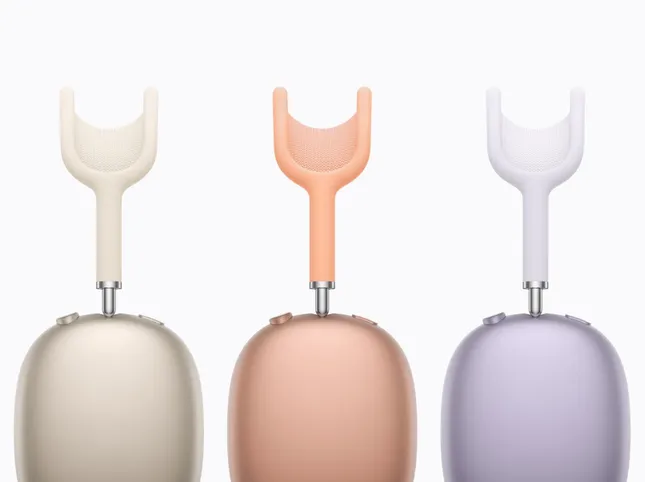
Apple’s new headphones are a perfect example of this step. They were surprisingly announced a few weeks ago, a year after Apple updated the previous version by adding the USB-C socket and wired listening to improve quality. They were greeted with amazement, if not skepticism: aesthetically they are identical to the previous model. Same aluminum design, same structure, same advantages and also the same limitations: considerable weight, an “amart” case that only covers the earcups and not the entirety of the headphones. Battery life has not changed, good but shorter than some competitors.
What really changes is what you can’t see: the processor. The AirPods Max move from the H1 chip to the H2, both Apple proprietary. The AirPods Max 2 also maintain the same driver, which is the component that transforms the electrical signal into sound, basically the equivalent of the small internal speaker. But the H2 chip, the same one mounted on the AirPods Pro 3, is enough to significantly change the listening experience.
How a processor changes music (and headphones)
Apple claims that thanks to the new chip – which allows new algorithms to process sound – active noise cancellation has improved up to 1.5 times compared to the previous generation. When tested, it is difficult to quantify: percentage formulas must always be taken with caution, but in practice the jump can certainly be felt.
In the test, external noise was managed better, especially in public transport and crowded environments, without creating that airlock effect that sometimes accompanies more aggressive ANC headphones. The Transparency mode remains a strong point: voices and ambience come in naturally, without a metallic effect.
But the biggest surprise is in the musical performance. The drivers remain the same 40 mm custom. Yet the AirPods Max 2 sound better: the credit goes to the digital signal processing, which makes the distinction between a “normal” and a “lossless” file less central in everyday listening.
It can be heard above all in spatial audio, where the work done by Apple in integrating software and hardware emerges: listening to songs encoded in this way (here is a more detailed explanation), the instruments are separated better, the sound stage is wider, the sound breathes more. Even with traditional stereo listening the result is convincing: fuller but controlled bass, more readable voices, greater general clarity.
As in the previous model, the sound improves further if you connect the headphones directly to the device with a USB-C cable, avoiding intermediate wireless conversions. We are talking about nuances, difficult to grasp without attention, but present. There isn’t a dramatic improvement, so much as the sensation of a richer, more balanced sound. Because we are entering an era where the processor matters as much, if not more, than the driver and traditional hardware. Or perhaps we have already entered it without realizing it.
It still makes sense to talk about high fidelity?
In recent years the debate on digital music quality has often focused on files: compression, high resolution, lossless, bitrate. This was also demonstrated, in the mainstream field, by the delay with which the hi-fi version of Spotify arrived. These are real issues, but less and less decisive in daily listening with wireless headphones, which is one of the most widespread ways, if not the most widespread. If a processor intervenes in real time by correcting and adapting the sound, the final quality depends on a complex system. It’s like when we take a photo with a smartphone: the result depends on the lens, but also on how the phone processes and improves the image in real time, making it more similar to what we see with the eye.
The AirPods Max 2, like most contemporary headphones and headphones, work with a different logic than classic hi-fi. There we looked for fidelity, or rather neutrality of the audio chain: here we look for the best possible perception through calculation and algorithmic correction.
Nothing changes, everything changes
It should be added that the H2 chip also brings functions such as adaptive audio, conversation detection, voice isolation, custom volume and real-time translation, already seen on the AirPods Pro 3. Some are accessories, others very useful in daily life. They all tell the same Apple idea: headphones are no longer just tools for listening to music, but wearable computers dedicated to sound.
In general, the AirPods Max 2 change nothing on the outside and almost everything on the inside. Those hoping for a redesign will be disappointed, and those who have recently purchased the previous model probably don’t have enough reasons for an immediate upgrade. Just as the argument that is often made when talking about Apple products is true: they work better within an integrated ecosystem of hardware and software. Translated: on Android they lose a good part of the convenience and some functions.
Could we have dared more in terms of classic hardware and compatibility? Definitely yes, starting from the correction of some historical defects. But Apple’s bet is the one from which we started: for a large audience, a processor makes the difference because you can’t see it, but you can feel it – regardless of the specifications that professionals and enthusiasts look at. Today, musical quality does not only depend on what we listen to, but also on what processes it before it reaches our ears.