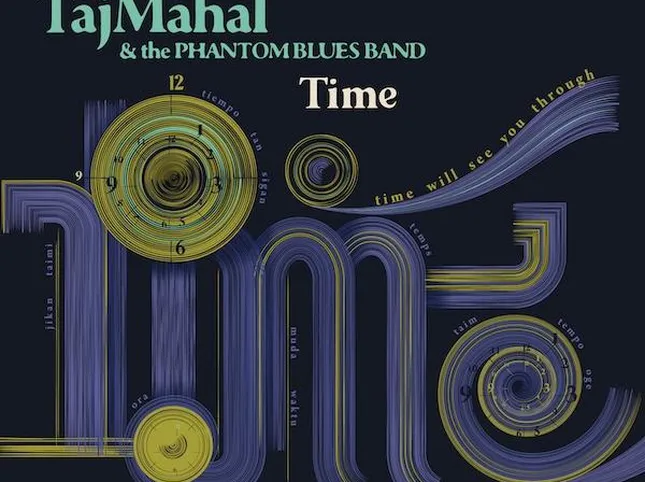
Taj Mahal sounds as if the night is still young
The fate of Henry Saint Clair Fredericks he was probably marked from the first day he came into the world, the May 17, 1942in the neighborhood of Harlem in New York. Son of a jazz pianist and a gospel singer the boy had no choice but to be ensnared by the warm and welcoming embrace of the seven notes. When it became clear that his work would be about music, at some point in the 1960s he gave himself a new name: Taj Mahal. Yes, just like the Indian mausoleum located at Agra.
And it is with that name that even today, at almost 84 years of age, Henry Saint Clair Fredericks is known in the music news. Taj Mahal he is a bluesman who in his long career has collaborated with artists of the highest prestige, they can be mentioned Rolling Stones, Ry Cooder, Eric Clapton, Etta James, Howlin’ Wolf, Buddy Guy, Lightnin’ Hopkins And Muddy Waters. If blues can be considered his genre of choice, Mahal has gradually broadened his field of interests to other musical genres by exploring the popular roots of African music, those of American music and, believing with good reason that music knows no boundaries or even labels that can cage it, he has explored different sounds: soul, funky, Cajun, zydeco, jazz, swing, folk, reggae.
A whole set of sounds that can be found in the new album by Taj Mahal titled “Time”recorded with the support of Phantom Blues Banda group of musicians with whom he has achieved a thirty-year collaboration. Among the guests featured on the album are the New Orleans pianist Jon Cleary and the organist Mick Weaver. Recorded at Ultratone Studios in Studio City, California, the album reflects the band’s chemistry, with a rich mix of reggae rhythms, New Orleans grooves, country blues and Latin influences.
“Time” it is also the title of the first single from the album. An unreleased song by Bill Withers – the African American singer who passed away in 2020, whose most famous song is “Ain’t no sunshine” – which he recorded as a demo, but which then got lost in the depths of some archive and was never released.
Taj Mahal he recovered the song and, having received the green light from Withers’ wife, Marcia, finally released it. Speaking of Bill Withers and of the song’s origins, Taj says: “My ex-wife went to school with Bill Withers’ wife, so they knew each other, and I got to spend time with him. I always had a lot of respect for that brother for what he brought to music. Bill could come on stage with an acoustic guitar and sing something like ‘Grandma’s Hands,’ and it got straight to people’s hearts. He didn’t jump around, he didn’t try to be flashy, he just had his time and his way. things. That honesty in his music meant a lot. This song came through, I listened to it a couple of times and felt that movement, that message. And we were grateful to get his blessing to record it.”
The producer Tony Braunagel explained how the song came about during the recording sessions: “During the recording process of the album “Time”, Larry Fulcher and I, producers and members of the Phantom Blues Band, enlisted the advice of our long-time friend Steve Berkowitz to manage relationships with the record companies in preparation for the release. Steve, a highly experienced and creative executive who had previously managed Sony Legacy, had a brilliant idea. While working with Bill Withers, when he was still among us, they had come across in an unreleased demo by Bill entitled “Time”. Steve immediately thought the song would be perfect for Taj. With the album still in the works, he played it for us and it was immediately received with enthusiasm. The song conveys a shared human experience, the vision of Withers now honored and celebrated through Taj and his talented collaborators, ready to be heard and appreciated.”
In an interview granted to Variety Taj Mahal he reflected on his relationship with Bill Withers: “When we finally met, it was as if we could see each other across the universe, and all that distance disappeared. He was an authentic person. And I always admired his work, his concerts, the musicians he played with, his ideas. You just listen to one note and you immediately know who you are dealing with… After he retired from the music business, I met him again. I think he was in New York, putting up shelves for his daughter at college, and it was just Bill Withers in his tracksuit. work.”
“Time” it’s not the only cover (if you can call it that) on the album. In fact, they are also present “Talkin Blues” Of Bob Marley with the participation of Ziggy Marleythe traditional “Wild About My Lovin”, “Sweet Lorene” Of Otis Redding, “Ask Me ‘Bout Nothin (But the Blues)” Of Bobby ‘Blue’ Bland and an Afro-Cuban version of “You Put The Whammy On Me”. It’s timeless music. As he writes Ruthie Foster in the album’s liner notes: “Turn up the volume, this is deep-grooving music, made by a band that still sounds like the night is young. The fearless, generous spirit of Taj Mahal still hovers over everything with that genre-spanning joy. It leads you along the way with a history lesson, and the Phantoms bring it with honor to the Griot.”
Tracklist:
01. Life of Love
02. Wild About My Lovin’
03. Crazy About A Jukebox
04. Time
05. You Put The Whammy On Me
06. Talkin’ Blues
07. Sweet Lorene
08. Ask Me About Nothing (But The Blues)
09. It’s Your Voodoo Working
10. Rowdy Blues