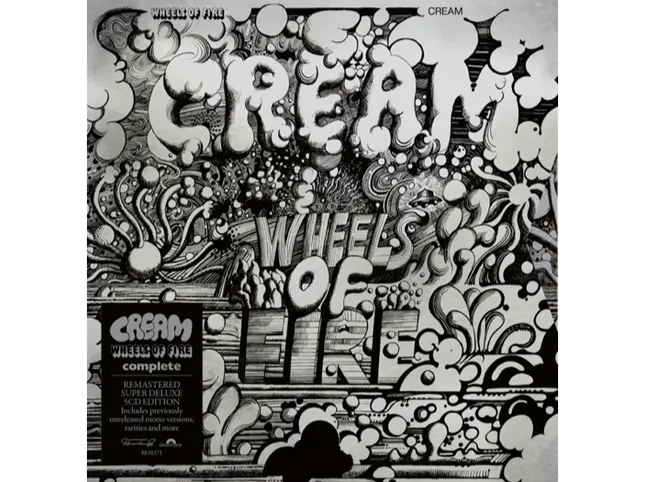
Cream, new edition of “Wheels of Fire” with unreleased songs and rarities
On June 14, 1968 i Cream they published Wheels of Firean ambitious double album that balanced studio work with the live dimension. What would be remembered as the creative peak of the British trio coincided, paradoxically, with its end: just twenty-six days after the US release, the band officially announced the dissolutionleaving the European public in a climate of uncertainty, given that in the United Kingdom the album would only arrive in stores in August.
Almost sixty years later, a new “Super Deluxe” edition attempts to fully reconstruct the legacy of that work. The project stands out for the recovery of original mono tapesconsidered missing for decades, and for a restoration on the stereo version. The latter was released from the trial Haeco-CSGa technical system used in 1968 to make stereo records compatible with mono turntables, but which at the time had compromised their natural sound.
The documentary heart of this re-edition lies in the archive material belonging to Felix Pappalardithe group’s producer and key figure in their sound. The story of the discovery is almost unbelievable: in the early Seventies, leaving an apartment in Greenwich Village, Pappalardi and his wife forgot dozens of reels in a plastic bag.
The material, recovered by the next tenant, contained outtakes, alternate mixes and recording sessions fundamental to the history of the group. After passing through the hands of collector Kore Yoors and historian Larry Yelen, the tapes were finally acquired and digitized by producers Bill Levenson and Johnny Chandler for this project, which required several years of research.
Formed in London in 1966, Cream went down in history as the very first “supergroup”. The trio united three already established individuals: Jack Bruce (bass and vocals), Eric Clapton (guitar) e Ginger Baker (drums), coming from key formations such as John Mayall’s Bluesbreakers and the Graham Bond Organisation.
Despite the overwhelming commercial success (Wheels of Fire it was the first double album to go platinum, reaching the top of the charts in the United States and Australia) internal tensions and the absence of a common vision led to the breakup. On July 10, 1968, as the album climbed the charts, the members called it quits citing a lack of musical direction and inspiration.
The sessions for the album began in the summer of 1967 in London, then continued in various phases in the United States between New York and the rest of the country. The second LP of the original set instead gathered the power of the band live, with recordings made at Winterland Ballroom et al Fillmore of San Francisco. Among these stands out the version of Crossroadswhose Clapton solo still remains one of the most studied passages in the history of rock.
Although the group’s discography would end the following year with the posthumous Goodbye, Wheels of Fire it remains the definitive testimony of the British “power trio”, a document that continues to exert a significant influence on the evolution of contemporary rock music.
In the format of five CDs or 3 LPs, the disc is available for pre-order here.