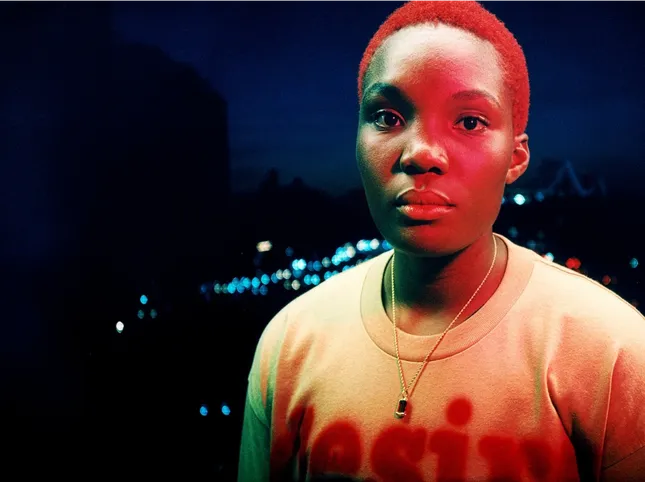
Arlo Parks: “I’ve grown up. I dream of collaborating with Rosalía”
Five years have passed since Arlo Parks, then in his early twenties, debuted with “Collapsed in sunbeams”, starting from poetry to give shape to an intimate and recognizable musical language. Today the London singer-songwriter, born in 2000, still continues to also take inspiration from your diarybut the range of experiences has broadened, crossing different cities and new spaces, to the point of leading her to fall in love even on a dance floor. After “My soft machine” in 2023, comes “Ambiguous Desire”, the third studio album released last April 3, which marks a new chapter in the personal and artistic growth of Anaïs Oluwatoyin Estelle Marinho.
Arlo Parks’ new album is a record born between New York nightlife and community and more introspective moments, built together with the producer Baird (Brockhampton, Kevin Abstract), in which the energy of the clubs – between house, electronic and alternative suggestions – it is intertwined with thoughtful and intimate writingwhich remains the artist’s distinctive trait. It is a work between physicality and vulnerability, in which movement and introspection, body and word coexist. “I grew up, I experienced great love, I let go of certain things, I was hurt in new ways. This record reflects the new life I lived,” she tells Rockol.
What kind of sensations, emotions, fears or expectations accompanied the release of the new album “Ambiguous Desire”?
Arlo Parks: Honestly I feel very calm, there’s this silent feeling of fulfillment that runs through me, because I know I gave everything to this record and that it’s exactly what it was supposed to be. From the visual imagery to the packaging, from the images to the percussion, everything is truly in the right place.
“Ambiguous Desire” marks a significant evolution in Arlo Parks’ sound: how natural was it to move towards a sound imagery more linked to club culture?
Arlo Parks: The direction of my records always reflects my surroundings, my passions and my life’s path: they are like time capsules that I use to preserve the things that have affected me the most. I was spending a lot of time in clubs, falling in love – and falling in love on the dance floor too – so it was completely natural that that music and that space influenced the sound of the album.
The title “Ambiguous Desire” is very evocative: what does this “ambiguous desire” mean, and how does it run through the album?
Arlo Parks: “Ambiguous Desire” is about fluidity, mystery and desire. We learn so much about ourselves through the people and things we desire. This record seems like a collage of liminal spaces, love and desire, so that phrase seemed like the perfect container to enclose all of this.
What characteristics does an “ambiguous desire” have, according to Arlo Parks?
Arlo Parks: An ambiguous desire is like the haze on the dance floor, foggy mirrors, metallic neon street lamps, the chain of the person you love, which you wear when you miss him.
“When I catch a / glimpse of heaven / I know I can’t / take it with me / Maybe knowing that is closure”, is a passage from the lyrics of “Heaven”. While some lines of “Luck of life” read: “I need a sign / I can’t find a way out / without you”, it is a quote from “Luck of life”. Intimacy and physical impulse, introspection and movement coexist in the new songs. What work has been conducted to maintain this balance?
Arlo Parks: It doesn’t seem like an intentionally constructed balance to me, I have the feeling of limiting myself to observing life and, in a certain sense, observing myself. Being alive is complicated, so those frictions and contradictions all coexist in my work.
How does an Arlo Parks song usually come about? From a melody, from a lyric or from something else?
Arlo Parks: For this album I started building the songs starting from melodies or notes in my diary. Sometimes a melody would stick in my head out of nowhere, other times it would be a conversation, a story or a moment that kept coming back to me and I felt the need to put it somewhere.
In recent years you’ve lived between London, Los Angeles and New York – how have these places and their music scenes influenced the sound of the album?
Arlo Parks: All three of these cities for me are very different from each other – in the architecture, in the climate, in the clothes, in the very form of the underground. London is home, there’s something dark and murky about it: I think of post-dubstep Croydon, things like the early works of James Blake or Kode9, I think of raves in December and when you get lost in the woods. New York gives me the idea of having a very rich history linked to house and disco, it’s vibrant, and everything and everyone is always on the move. Los Angeles is spread out, sunny and slower – people drive and collaborate seamlessly. All three are special cities in their own way and their energies have each contributed in their own way.
You’ve often talked about discovering club culture as a space for connection: what did you find there that was previously missing in your music or personality?
Arlo Parks: Club culture, for me, mixes the public and private in a new way, and has pushed me to embrace opposites in my music. I could look inside myself and outward at the same time. I could have a private, almost transcendent experience in a room full of thousands of people. I could put together abrasive drums and soft vocals. I believe this duality was what was missing.
The world of club culture also emerges in your lyrics: in “Blue Disco” there is a verse that mentions Goldie and Prince. What kind of imagery do you want to evoke and what attracted you to that combination?
Arlo Parks: I was just talking about what I put on the AUX when I DJed for friends. It’s a very simple phrase which, in my opinion, makes the song come alive, like a photograph.
Compared to your previous works, more intimate and “camera”, “Ambiguous Desire” seems more open and shared. There is a stronger presence of the body, movement and rhythm – without losing delicacy: was it also a way to go beyond a more internal and introspective approach to writing? Does it also seem like an emotional change to you, as well as a musical one?
Arlo Parks: Yes, it’s definitely something emotional. I grew up, I experienced great love, I let go of certain things, I was hurt in new ways. This record reflects the new life I’ve been living.
Were there any artists, producers or albums that particularly influenced you during the making of “Ambiguous Desire”?
Arlo Parks: So many! As for artists I think of Underworld, Madonna, Burial, Jeff Mills and Solange. As for albums, I’m thinking of Radiohead’s “The King of Limbs” remix album (“TKOL RMX 1234567”, ed.), Octo Octa’s “Resonant Body”, and Prince’s “For You”. And then, as producers, Shep Pettibone, PinkPantheress and Dev Hynes.
If you had to indicate your “album of the moment” — something you feel particularly close to during this period — what would it be, and why?
Arlo Parks: My album of the moment is a record called “First Hand Smoke” by DJ Swisha. He’s an incredible DJ and the record is a mix of juke, house and footwork. It’s really a lot of fun.
In 2022 you took to the Glastonbury stage together with Lorde and Clairo. Have you ever talked about collaborating in the studio?
Arlo Parks: Not yet, but I think it would be great, they are wonderful people.
You have already collaborated with Phoebe Bridgers in the past. And for “Ambiguous Desire” you collaborated with Sampha. Is there a collaboration that you dream of more than others?
Arlo Parks: I would love to collaborate with Rosalía, I think it would be something life-changing.
“Ambiguous Desire” will be supported by an extensive tour across America, Europe and the United Kingdom. How do you imagine bringing these new songs live? Do you want to bring the energy of the club to the stage or reinterpret it in a more intimate way?
Arlo Parks: I definitely want people to feel the bass in their body and for there to be the energy of the club, but maintaining the intimacy and poetry of my previous works.
Looking at the music scene in recent years – especially for artists of your generation – what do you think has changed the most in the way music is written, produced and experienced?
Arlo Parks: I think that today music can be produced anywhere and has become somewhat democratized: someone can make an extraordinary record even from home, and it’s a beautiful thing. We have more access to creativity than ever.
At the beginning of your career you were defined as “the voice of a generation”: do you still feel that weight, or have you found a different way of relating to this label?
Arlo Parks: I don’t think I ever felt the pressure of being “the” voice par excellence, but the idea of being a voice resonated with me, because I felt like I was telling stories that people my age could relate to. Now I just think about doing a good job and telling the truth.
Looking at your past, present and future, which moment of your journey – artistic or personal – does “Ambiguous Desire” represent for you?
Arlo Parks: I think it represents a moment where I’m finding real confidence in myself and learning to trust my instincts.