Can a song be poetry?
What better occasion than World Poetry Day to address the age-old dilemma that separates the written text from the one sung? It is not necessarily just an academic exercise, but a reflection on the very nature of language, which is our means of knowing the world. Music purists turn up their noses at this comparison, just like literary purists. The truth is that, at least for me, there is no such easy line to draw: language is by its nature changeable and music too, because it is right and beautiful that art and speech are free. But partly in jest, partly so as not to die I also try to join this debate by defending the thesis that, no: there is no reason to exclude a song from the sacred realm of poetry.
Original sin
Historically, asking whether a song is poetry is almost a paradox. At the origins of Western civilization, poetry and music were indistinguishable. The etymology is so beautiful that it would be a shame to ignore it: the term “lyric” derives from the lyrethe stringed instrument that once accompanied the verses, indicating the indissoluble union between poetry and music in the origins of the genre.
THE rhapsodes they didn’t read the Homeric poems: they sang them. The “Iliad” and “Odyssey” were not read, but sung or recited with precise rhythmic cadences, also to aid memory. A bit like for i troubadoursthose medieval poets and composers of the south of France who sang of love and chivalric themes in the langue d’oc, creating courtly lyric poetry.
The split occurred with the invention of the printing press and the diffusion of reading silent. The poem closed on the page, becoming music for the eyeswhile the song has maintained its performative and oral dimension.
Structural divergences
Despite the “blood” relationship, from a technical point of view they exist crucial differences which a critical eye obviously cannot ignore.
Poetry must generate its own rhythm exclusively through combination of phonemes, accents and pauses; the music is internal to the words. In a song the lyrics are often “gaps”, because the silence or tension are filled by the instruments, and certain repetitions (the choruses, banally) which may appear banal on paper, serve to support the harmonious structure.
While Italian poetry is based on syllabic count (hendecasyllables, septenaries), the song responds to the musical quadrature (bars of 4/4, 3/4). This means that a word in a song can be “stretched” or “broken” by the melody, which is not permitted in traditional metrical reading.
The Dylan case
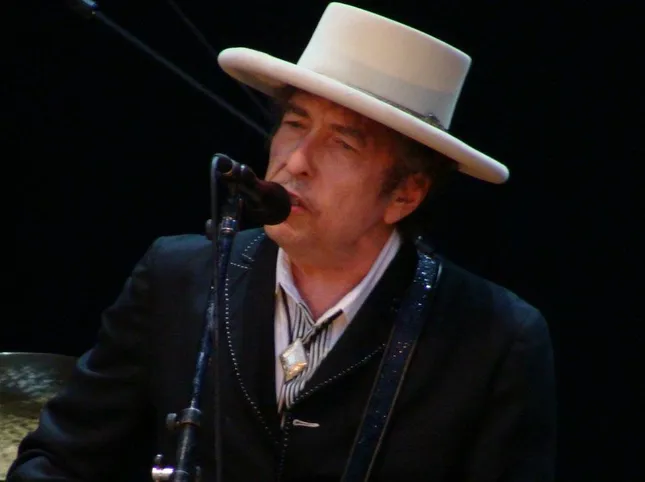
The Nobel Prize for Literature to Bob Dylan 2016 marks the point of no return. The commission’s motivation – “for having created new poetic expressions within the great tradition of American song” – made a technical concept official: the song is a literary genre in its own right.
If even the eminent thinkers of Stockholm threw themselves into heresy, so can I who am nobody: because certain songs by Fabrizio De André or of Francesco Guccini (who would choke me if he knew that I considered him a poet) shouldn’t they be valid (also) as poems, since they respect certain metric canons and, above all, have texts with a completely autonomous value and dignity? Isn’t it true that they can move us even just by reading them, without music in our ears? And isn’t this, in the end, what really matters, the ultimate goal of both a poet and a songwriter?
Calling a song “poetry” doesn’t help either elevate a singer-songwriter nor even a belittle a poet: he is simply the recognition of a function. A song becomes poetry when the text does not limit itself to describing an emotion, but uses language in a connotative, ambiguous and layered way, transforming the word into a universal symbol which resonates even when the amplifier is turned off.