Sanremo 40 years ago: “She will come” by Mango
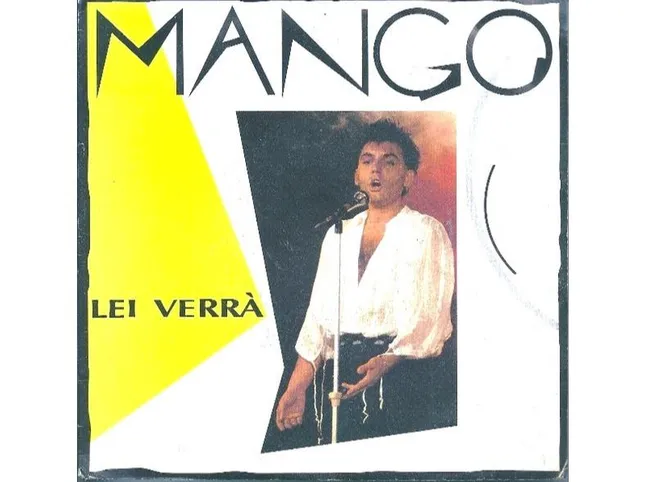
“She will come” – fourteenth place
Mango – Sanremo 1986
Authors: Giuseppe Mango, Alberto Salerno
The 1986 Sanremo Festival moved in the direction of continuity, while introducing some significant innovations. The most notable was the hosting debut of the brilliant and versatile Loretta Goggi, the first woman in the history of the event to hold the role of main presenter. Among the protagonists of that‘edition c‘it was Pino Mango, who there‘the previous year he had made himself noticed among the New Proposals, winning the Critics’ Award in the aforementioned category with “The journey”. In 1986, l‘Lucanian artist did not limit himself to going back on stage as a performer, but signed four pieces: starting from the theme song of the event, performed by Goggi, entitled “I will be born”, passing through “Re” by Loredana Bertè, debuting on the Riviera, and “No pain” for the young Anna Bussotti. But the song that still stands out above all today was the proposal presented in the first person, that is “She will come”. Co-authored with Alberto Salerno, the song only ranked in fourteenth place, but quickly established itself as one of the cornerstones of his discography. An elegant and unconventional ballad, with an enveloping melody, which leaves the door open to the sun and hope for a love that “no longer gives dreams”, but which continues to generate thirst and desire. “She will come” thus imposed itself as a proposal outside the Sanremo canons, a‘ode to all‘waiting capable of transforming the‘absence in a delicate and sighing longing.
«Pino started writing the lyrics of his songs in 2002; previously he used to compose in mock English, that is, using Anglophone sounds that sometimes had a meaning and sometimes not. I remember when he made me listen to the audition of “Here she comes”. I was struck. It was a truly inspired piece, in which the rhythmic cadence on the upbeat was perfectly intertwined with a very original melody supported by unpredictable harmonic turns. And over everything his voice stood out, sovereign. Then, Alberto Salerno started working on the text and, in a completely natural way, “Here she comes” has become “She will come.” But who was this she? A woman, a daughter, life itself, perhaps there‘statement in music. Many saw an explicitly sexual meaning in it. Some even speculated that it was death. The fact is that Pino never wanted to give one‘specific interpretation, leaving the ending open to this song which has thus become the soundtrack of a thousand different photographs, those of the life of each of us”.
Laura Valente (singer and wife of Mango)
Pino left too soon, suddenly and in the way he always wanted: singing. THE‘8 December 2014 remains a date that any Italian music fan remembers with deep regret, for the‘enormous artistic void that he has left and which will hardly ever be filled. His participation in the Sanremo Festival was seven in total, among which L. stands out in particular‘last, in 2007, competing with “Chissà se nevica”, a song that deserves to be mentioned in these pages. In particular, we should remember the version performed in the evening of duets together with Laura Valente, his sweet wife, who had previously already graced the stage of the‘Ariston twice, in 1992 and 1993, as the voice of Matia Bazar. Pino and Laura created a‘intense interpretation of rare beauty. Watching mum and dad from home, c‘were their two children, Filippo and Angelina, who all‘at the time they were twelve and almost six years old respectively. Today, the former is a professional drummer, while the latter has collected the‘her parents’ singing legacy and graduated as winner of the‘2024 edition of Sanremo, with “Boredom”. Theirs is a united family, in the name of‘art. It is practically impossible to draw up an inventory of all the disenchantment that Mango has managed to convey through his music. If we wanted to translate his work into numbers, we would count sixteen unreleased albums, three live albums, two covers, one collection and three books of poetry. His talent, perhaps too avant-garde, was able to combine a refined technique with a more spiritual depth. Those with a great vocal range are not always able to truly excite. Mango, on the other hand, was able to touch unthinkable notes and, at the same time, succeeded in the noble aim of caressing the most intimate strings of our soul. “She will come” remains one of his highest episodes, as Laura told us, cryptic if we want, but full of grace. And Pino has centered his career precisely on beauty, voting her the‘entire existence. His melodies, impregnated with Mediterranean aromas and flavours, will never cease to arouse suggestions and generate enchantment, because the‘authenticity el‘essentiality that he was able to give us will remain simply unparalleled. Mango was an innovator, capable of continually putting himself on the line, always in balance between awareness and experimentation. In the specific case of “She will come”, the text by Alberto Salerno, based on‘ indeterminacy and free interpretation, captures the nuances and opportunities offered by music. And this indefinite, almost suspended sense passes through the‘entire narrative. When questioned several times about the meaning of the song, Mango revealed that the “she” of the title did not necessarily indicate a woman, but could also allude to a‘idea or ideal, such as justice. Call it poetic ambiguity if you want, but in this “I say I don’t say” there is the space that each of us is called to fill with our own imagination. This is one of the teachings that Mango has left us. And which will continue to accompany us, “in the time to come.”

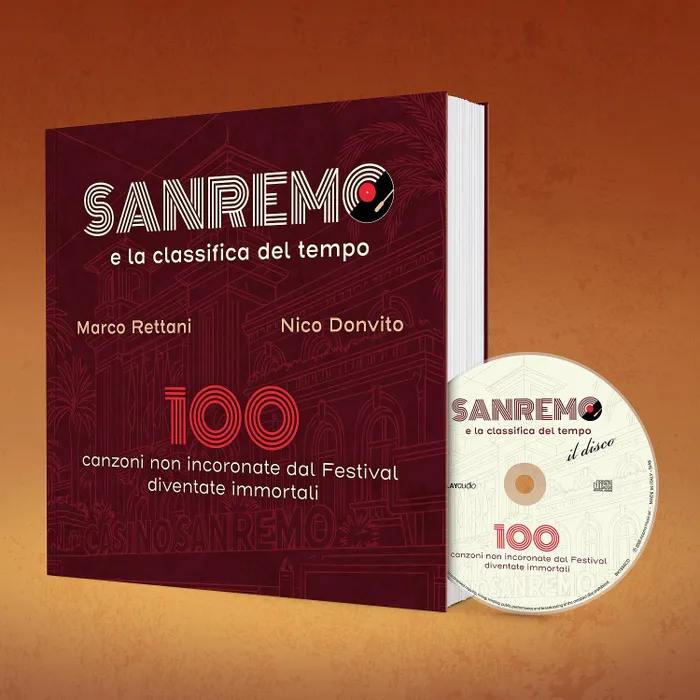
This text is taken, courtesy of the authors and the publisher, from “Sanremo e la classification del tempo”, by Nico Donvito and Marco Rettani (Azzurra Music, 324 pages – book + CD -, €29.90)