Sinéad O’Connor’s legacy passes through Fontaines DC
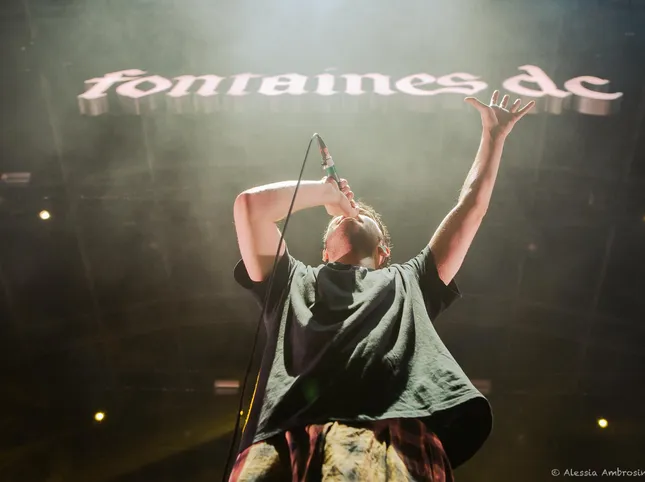
The Fontaines DC they return to meet music and commitment with a choice of historical and symbolic weight. The Dublin band have recorded a studio version of Sinéad O’Connor’s ‘Black Boys On Mopeds’ for their collective album ‘HELP(2)’, out March 6 in support of War Child. An experience that the group described as “unique and capable of giving meaning to life”. The song, originally released in 1990, had already appeared in Fontaines DC’s live repertoire in an acoustic reading performed a Nashville in October 2022. This time, however, it is the first official recording, made at the invitation of producer James Ford. The announcement came directly from the band’s social channels: “We recorded a cover of ‘Black Boys On Mopeds’. It was a real privilege to be asked to contribute to this record.” The story continues with a simultaneously personal and political note: “The time spent in the studio was a unique and profoundly vital experience. Carlos O’Connell was unable to be with us due to the birth of his son. Today more than ever it is essential to support the work of War Child”.
“HELP(2)” opens with “Opening Night”, the new single by Arctic Monkeysand puts together a tracklist that photographs the state of the art of international alternative music: Depeche Mode, Pulp, Beth Gibbons, Beck, Sampha, Big Thief, Wet Leg, King Krule, Foals, Arlo Parks, The Last Dinner Party, among others. Fontaines DC frontman Grian Chatten is also present in the choral song “Flags”, co-written with Damon Albarn and Kae Tempest. James Ford said that not all the artists contacted accepted the invitation: some considered the project “too political”. A stance that clarifies the meaning of “HELP(2)”, born in collaboration with Abbey Road Studios and recorded largely in a week of November 2025, following an idea of creative urgency and immediate response to the present.
The choice of “Black Boys On Mopeds” is not random. Sinéad O’Connor’s song was born as a reaction to the death of Colin Roach, a twenty-one-year-old British man of Jamaican origin who died in 1983and is a direct denunciation of police brutality. Without naming it openly, the lyrics reflect the political climate of England at the time, including an explicit reference to the Thatcher government, and find a place in the artist’s second album, “I Do Not Want What I Haven’t Got”. Civil commitment spanned O’Connor’s entire career, and she passed away in 2023. In 2020 she released a cover of “Trouble Of The World” in support of Black Lives Matter organizations. The theme of birth, also evoked in Fontaines DC’s message, returns in their recent production. In an interview with NMEthe band explained that the 2025 single “It’s Amazing To Be Young” was written on the occasion of the birth of O’Connell’s daughter: “It started alongside Carlos’ newborn baby and is a message to her. Sometimes we are cynical, the world pushes you to be. But the birth of a child introduces a pure beauty and hope that is impossible to refute.” Looking ahead, the group are preparing for a crucial summer of 2026: they will headline the Reading & Leeds Festival for the first time and will also headline the Electric Picnic bill in Ireland. The group confirmed that work on new material is underway and that testing unreleased songs live is not out of the question.
The reference to “HELP” inevitably refers to 1995. Promoted by Brian Eno, the original album has become one of the most celebrated benefit projects in contemporary music, thanks to the participation of Oasis, Blur, Radiohead, Massive Attack, Portishead, Sinéad O’Connor, Paul McCartney, Paul Weller and many more. All the songs were recorded in a single day, September 4, 1995, mixed the following day and released on September 9, following John Lennon’s idea that some records should function like newspapers, reacting to reality as it happens. The success was immediate: over 70,000 copies sold in the first day, first place in the British compilation charts and such an impact that it deserved a special BRIT Award, collected by Thom Yorke, and a Q Award. In 1996 the nomination for the Mercury Prize also arrived: the winner was Pulp with “Different Class”, who however chose to donate the entire prize to War Child. A gesture that today “HELP(2)” takes up and relaunches, bringing music back to the center as a tool for cultural and political intervention.