Lucio Dalla is a happy island
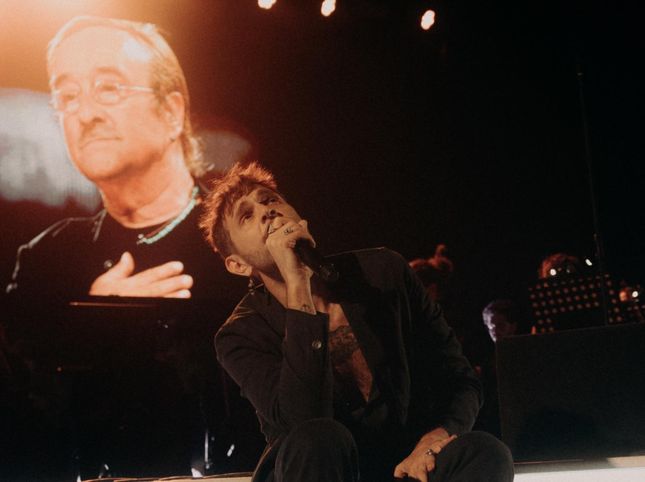
“Lucio is my happy island.” Renzo Rubino says it without hesitation: on Monday 21 July the Sforzesco Castello in Milan will bring the show “What would Lucio” would say, inspired by one of his song published in 2017. An opportunity to pay homage to the music and the revolutionary spirit of Lucio Dalla, in which the performance of Rubino, with original arrangements performed by an ensemble and accompanied by the stories of the journalist Gino Castaldo, will trace an intimate story and Emotional that combines notes and words in a story that returns to the public a poetic and personal portrait of the Bolognese singer -songwriter.
How “what Lucio would say” would be born
“After the winter concerts with the band I was really stressed at the thought of everything I should have faced, especially with the awareness that I must be constantly active and focused on each project and give my best on everything”, says Rubino that in this state of anxiety, listening to, he decided to record his piece. It was “Henna”, and from there the desire to organize concerts with orchestra dedicated to Lucio Dalla was born. «It is a concert that I do with great desire, it helps me to move away from the commitments of everyday life. For me it’s a holiday ».
A “holiday” from which not only ruby energy draws, but also those who share the stage with him. To accompany him, in addition to the orchestral training directed by Maestro Antonio Palazzo, there is Gino Castaldo, with whom Rubino built the show by intertwining music and words. «With Gino we have known each other for many years and better than him no one can tell Lucio Dalla. There is a combination of music and words, never rhetorical and obvious and never written. Gino goes to his arm, tells anecdotes, spuls memories, explains versions of songs every time in a different way. He is the pressing part from the point of view of the story, those who witness the show wants to know who Lucio Dalla was, even outside the musical life “, explains Rubino, who adds:” With the orchestra we did a great job on respecting Lucio’s discography. I myself try to make my contribution without distorting the songs, bringing my way of singing Lucio on stage just as I would do it home ».
The original scaletta by Lucio Dalla
The ladder is the original one that Lucio Dalla chose to bring to a live with orchestra to Martina Franca: the first concert to which Rubino witnessed and from which he was deeply affected. “On that occasion there was also Antonio Palazzo and together, to close the circle, we are transporting the songs that Lucio did that evening. We did not choose the ladder, Lucio chose it. ” That Rubino, he tells us, should have met in person before his debut in Sanremo. «His vocalist had asked him to meet me and had set an appointment at the Bravo Caffè in Bologna. Lucio, however, never showed up because he passed away a few days earlier. It was my moment of almost contact with Lucio Dalla. A few years later I unexpectedly found myself playing his piano at his house and at that moment I think I have known him ».
The stage at the Sforzesco Castle in Milan
An emotion that Renzo Rubino has enclosed in the show that has already conquered the audience of Martina Franca, Rome and Taranto and which will arrive even stronger in an Venue like that of the Castello Sforzesco. «It is an emotional journey that also has ironic parts, in Lucio Dalla style, and the Castello Sforzesco will be the peak of this mini tour. The first time I made the concert I was very excited, today I am learning to safeguard the songs, giving everything but always being a step back », says Rubino, who does not hesitate even when he wonders what, according to him, would say Lucio to those who make music and look for new ways to express themselves. «He would say to choose the most difficult road and that success is a point of his career but not the finish line. Through the tortuous, complicated paths, we get to art, to true life. To everything that makes a song powerful and not linked exclusively to the numbers ».