Thirty years of “Milk & Kisses”, the swan song of the Cocteau Twins
They were one of the most special bands born from the post-punk quarry. An example of alternative pop at its best, many long for an impossible reunion. His collection of studio albums and EP’s continues to shine. “Milk & Kisses” (Fontana, 96), the last of them and not the best known, is celebrating three decades.
Coming from the catacombs of Scottish post-punk, Cocteau Twins They built, since the early eighties, the foundations of dream pop and shoegaze. They patented an otherworldly sound that captivated Robert Smith himself – who got married to the sound of their romantic and mysterious melodies. Their songs have inspired several generations of musicians: from Slowdive to Ride, from The Sundays to The Cranberries and the obvious Beach House. They were the flagship of the legendary British label 4AD, although things were not as idyllic between both parties as one might think. And, with their abrupt separation in 1997, they left an indelible mark on the most personal and mysterious alternative music.
“Cocteau Twins have preferred to keep their legacy intact, without succumbing to the siren song of money or the vanity of social networks”
Guitarist Robin Guthrie, vocalist Elizabeth Fraser and bassist Simon Raymonde – who replaced the short-lived Will Heggie – created a chemistry that continues to dazzle, as can be seen in the performances and videos that have finally been uploaded to the Internet. Layers of guitars, tape echoes, drum machines and other effects served as a majestic and evocative cushion for the melodies of Fraser, in all probability the most extraordinary singer – in the literal sense of the word – that alternative pop and beyond has produced. Not only because of his style and technique: many of his melodies are based on invented words. From the gothic density of their origins, which related them to Siouxsie & Th1e Banshees and other crude post-punk romantics, they evolved to an increasingly ethereal and precious sound, without ever surrendering to the mainstream.
Originally from the south of Scotland – with the exception of Raymonde, who was English – it all began when, like so many other teenagers of the time, Guthrie and Fraser launched their expressive vehicle to escape the deadly boredom of the small town of Grangemouth. The year was 1979 and there was not much to do. The guitarist, despite his youth – or because of it – a sound nut and a pioneer in the experimental use of the guitar, left a tape in hand to 4AD co-founder Ivo Watts-Russell, who decided to sign them.“Garlands” (82) began a symbiotic relationship that produced five albums in the eighties and one at the beginning of the following decade, in addition to an inspired succession of EP’s and singles. The mystery of their sound would never be fully revealed, and it earned them a legion of followers all over the world (even in the Far East).
The band would release their last two albums through the multinational Fontana, after breaking up with 4AD. It happened after the publication of his most successful album, “Heaven or Las Vegas” (90), which incorporated electronic elements. The first for Fontana, “Four-Calendar Café”published in 1993, coincided with the breakup of Guthrie and Fraser, a fact that would ultimately be the group’s Achilles heel, along with Guthrie’s addictions. Guitarist and singer decided to continue with the band also because of their daughter, but in 1997 their differences would become insurmountable at the worst moment, when they were recording what would have been their ninth album. Coachella tried to rescue them in 2005, but apparently there wasn’t much money at stake nor was Fraser much into the effort. “I knew it wasn’t going to happen.”I would say some time later.
The three members of the band would later remember the process of creating the album that would be their farewell, “Milk & Kisses”it was fluid and pleasant. They had tried not to coincide in the study after Fraser and Guthrie’s romantic separation, but in that case they shared the eight weeks it took to complete it. An amount of time much less than that of their other albums, as they confessed. This speed was somewhat “surprising,” in Guthrie’s words. Produced by themselves, they recorded it in Brittany (France) and south London.
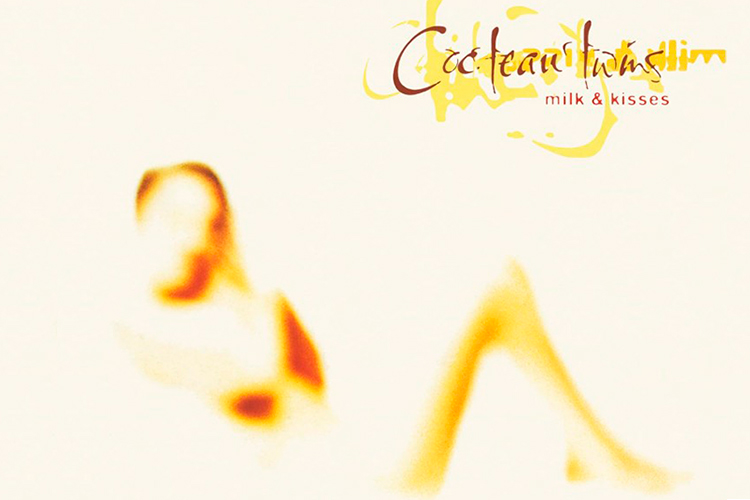
The title was suggested to Liz Fraser when she was recounting her sorrows to a friend on the phone. “I wish I could take the poison out of you and exchange it for milk and kisses.”he told him. “It’s very nice, isn’t it? It seemed very appropriate to me,” said the singer. And he stayed with it. Like its predecessor, the album displays an essential version of the group’s aesthetic, with fewer sonic layers and a more open and accessible spirit. The ethereal image on the cover sums it up. The group released two singles, “Violane”, left over from the mystery mark of the house, and “Tishbite”which exuded pop charm. “Rilkean Hearts”, another of the best, was conceived as a tribute to the late Jeff Buckley, a confessed fan of the German poet Rilke. The band took their celestial aesthetic to another level, with a twilight tone that was accentuated at the end of side B, as if they were anticipating the end of their journey.
In that spring of 1996 dominated by Brit-pop and more or less thick electronic music, the international press was not kind to the album. It had happened to other groups of their generation or a little later, who considered themselves amortized. Today it is evident that it is much better than what was said then, and some have even recognized it. In times of guitar revival and broad brush, the still young trio had become a melancholic artifact from another time, which many did not know where to put. In any case, bassist Simon Raymonde was not happy with the production, and stated regarding the 2021 remastering that “it suited him well”, something that “I almost never say.”
In commercial terms, “Milk & Kisses” It reached a discreet seventeenth position on the British charts. While, for years, the group’s 4AD catalog has been pampered with luxurious reissues, the two Fontana albums were resurrected on vinyl just two years ago, after many years missing from the shelves of the physical format (although a box of CDs was released with the material from their Fontana era), and with prices between absurd and astronomical. The 1996 vinyl can still exceed four hundred euros.
The trio rejected the (unfair) notion that the music of their last era was more commercial or made for a mass audience, due to having landed in a multinational company. But it is true that in Fontana’s albums the suffocating distortion or dense experimental environments give way, in a natural and unforced way, to atmospheric songs with more air, fewer layers and friendlier arrangements that do not detract from their personality.
Whether it was the lukewarm reception of what would be their last work, the complex romantic problems between the couple who founded the band, Guthrie’s addictions or a little of everything, in 1997, when they were recording the songs for what was going to be their ninth work, Elizabeth Fraser left the group. As always happens in these cases, there are so many versions of the ending of Cocteau Twins as fans, who today continue to argue on social media about the drama. Even Raymonde enters the rag from time to time on Instagram to add a little common sense. The successful return of Slowdive, one of his outstanding disciples, could have paved the way for a farewell tour or something like that, which in reality is still a long way off. Increasingly.
In times when groups replace indispensable members, get together for succulent festival offers or live off the income by cashing in on the road indefinitely in a more or less shameless manner – with frankly pathetic examples -, Cocteau Twins They have preferred to keep their legacy intact, without succumbing to the siren songs of money or the vanity of social networks.
There is too much youthful purity and romanticism in Cocteau Twins to sully her precious legacy by vile metal – may the late Escohotado forgive me – but I am sure that Elizabeth Fraser, embarking on some discreet projects such as the interesting psychedelic combo Sun’s Signature with percussionist Damon Reece (Spiritualized) and accompanying Massive Attack live when she can, does not use any cerebral or economic reasoning to refuse to revive her legendary band. He simply feels deep down that what he did with his companions is too special to add an epilogue that, as with so many others, would be unnecessary. In this case, almost a sacrilege. Music continues with all its magic intact, within the reach of whoever immerses themselves in it.