Ten “dark” 45s of Italian prog
Of the Italian progressive music of the Seventies, the 33rpm works will inevitably be remembered above all. Records which, on an international level, have contributed to defining the genre as the most successful attempt to create “homegrown” rock, recognizable and original. Although not immune to foreign influences, Italian prog has been able to insert into its plots elements deeply rooted in the culture of our country: opera, Mediterranean folk, lyrical and theatrical atmospheres; creating a unique, inimitable mix.
But Italian prog wasn’t nourished only by long playing: we often forget about the many 45s made largely by groups destined for oblivion. These are objects produced in limited editions, often ignored by the general public. Despite this, they have been able to become, over time, true relics for enthusiasts. Not only for their rarity, but also for the artistic value and inventiveness they contain.
So here are ten of these underground pearls, cloaked in dark charm and uniqueness, small forgotten gems that tell a lesser-known but equally fascinating side of the Italian progressive scene.
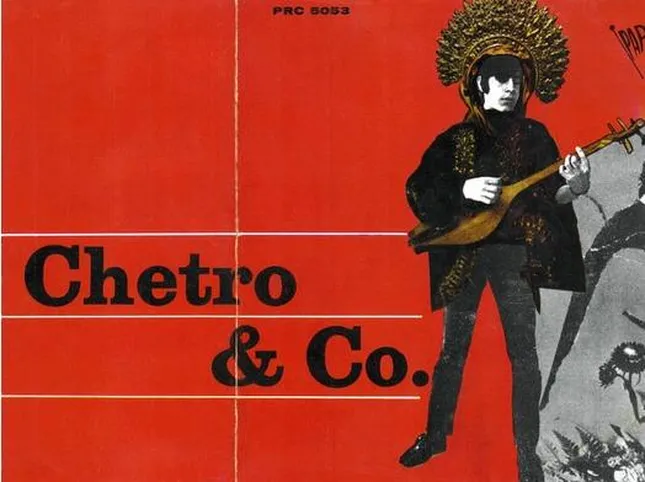
Chetro & Co. – Dances of the Evening (Suite in Psychedelic Mode)/The Colored Stones (1968)
For musical historiography, the little-known Chetro & Co. are generally placed in the psychedelic current. Yet, already in 1968, they released a single – embellished with a splendid gatefold cover – which surprisingly anticipated the atmospheres of prog. Even supported by Pier Paolo Pasolini, whose verses of his poetry Night they enrich Evening dancesChetro create two songs that overflow with free, swirling sounds, but at the same time guided by alienating melodic constructions. It is as if these compositions magically emerged from a mystical, colorful reality, suspended between dream and sonic concreteness. It’s a huge shame that this talent hasn’t found fulfillment in an album.
The Worms – Hill, parts 1 and 2 (1972)
An example of progressive super-underground, the Vercelli-based I Vermi, active since 1966, offer their only 45 rpm single, recorded with makeshift means and printed in a few hundred self-produced copies. The single revolves entirely around Hilla suite divided into two parts between side A and B. Conceived as an environmentalist mini-concept, the song denounces wild urbanization and imagines a nature ready to take back what man has disfigured. Musically it looks to the complex structures of King Crimson and Emerson, Lake & Palmer but does not forget to include New Trolls-style choirs.
The Eagles – Your Splendid Love/Agnus Dei (1973)
Very interesting and now forgotten, Le Aquile left as their only record this 45 rpm single from 1973, two songs that reveal a very mature personality for a band that remained on the margins of the market. Your Splendid Love alternates melodic openings and sudden harmonic twists, with a vibrant song supported by an energetic instrumental system. In filigree we can grasp intuitions that anticipate certain solutions dear to the Ticket to Hell (particularly the resemblance of a guitar riff with a section of Confession of the Lecco group), above all for that mixture of aggression and sacredness, of rock impetus and mystical tension. In the back of Agnus Dei melodic moments are mixed with a restless spirituality which translates into intense crescendos and almost liturgical passages.
Lydia and the Hellua Xenium – Woe to You/Invocation (1973)
With just two 45s – recorded between ’72 and ’73, then passed over in silence and today transformed into cult objects – Lydia and Hellua Xenium (translated as “The dissipation of other people’s assets”) have long represented one of the darkest mysteries of Italian prog. Only recently were their origins discovered – Busto Arsizio -, the musicians and the authors: Fernando Lattuada and Rinaldo Prandoni. The identity of the singer, Lydia, remains suspended in a gray area. What remains of her is the surprising song, between apocalyptic lyrics and divine justice to season a dark and visceral, almost gothic rock, which was unprecedented in Italy.
Officina Meccanica – Bambini Innocenti/Bambini Innocenti (Instrumental) (1973)
Originally from the province of Rome, Officina Meccanica is one of those groups that, despite leaving a minimal mark on the market, deserve to be remembered. Listening to the 45 rpm record Innocent children in fact, one has the clear sensation of being in front of a group with compositional and interpretative means above average, with articulated structures, well-calibrated dynamics and instrumental passages full of pathos. Their progressive moves on theatrical and dramatic coordinates, with an expressive intensity that recalls the solemn and virtuosic atmospheres of the Premiata Forneria Marconi and the Banco del Mutuo Soccorso. Enveloping keyboards, incisive guitars and an emphatic vocality contribute to creating a solid and mature sound system, which suggests much broader developments. With one album under his belt – which wouldn’t arrive until 2007 (The madness of the fire mimeAMS), a collection of the five singles released between 1972 and 1977 – and an adequate production, Officina Meccanica could have conquered an important space in the Italian prog scene.
Apologia Lupi – April Thoughts/That Something New (1974)
Apologia Lupi were formed in Potenza in 1969 with the name I Lupi, in full proto-prog ferment. With this acronym they recorded a first 45 rpm single which obtained a response limited to the local area, without managing to cross regional borders. After a period of adjustment and some lineup changes, the group reorganized itself and in 1974 returned to the studio with a new identity, choosing the name Apologia Lupi. The change of name also coincides with a partial stylistic change: the sound becomes more refined, with greater attention to compositions and arrangements, approaching the more melodic solutions of Osanna.
Tram Company – Passage/Useless Words (1974)
Group from Vignola (Modena), born under the name of Charisma in 1971 and made up of musicians coming from different experiences – including a collaboration with the future Stadio Gaetano Curreri. In 1974 BASF, then careful to launch new groups, put them under contract, imposing a name change. As a tram company they produce a 45 rpm single, which is featured on the A side Ridea progressive piece, with keyboards in the foreground and a flute of clear PFM ancestry.
Cream – It’s Always You/If I Were (1976)
Crema from Pavia, founded in 1969 and stabilized around 1972, released just one single in 1976 for the New Star label. Side A, It’s always you, proposes a melodic progressive with a typically Italian symphonic imprint, with synthesizers and Hammond inserts that dominate the scene, bringing the group closer to Le Orme, while sporadic flashes of electric guitar recall Alphataurus. Side B veers towards a more romantic and bright sound, with keyboards and organ still central and acoustic guitars with a slightly psychedelic touch.
Scorpyo – Destination Infinity/Visions (1977)
Scorpyo’s only 45, a parallel and somewhat mirror project to Lydia and Hellua Xenium, sharing authors, imagery and the same blanket of mystery that still surrounds their history today. The sound coordinates are similar: a heavy-prog with arcane features, imbued with twilight psychedelia, organ and dark guitars to create atmospheres suspended between esoteric rituality and dark tension. The single had no promotion or notable response. Over time, however, that very isolation fueled its fascination: today it is considered a small relic for collectors, as rare as the information on its genesis, the recording sessions and the identity of the musicians involved is fragmentary.
The Operas – King Solomon/Air, Water, Earth and Fire (1978)
Compared to other bands mentioned, Opera have had a very respectable career. They were born in Messina in the early seventies, debuted at the Festivalbar in 1975 and took part in the Sanremo Festival several times. In 1978 they received good feedback with the theater show “Air, water, earth and fire”, from which this single was taken. While King Solomon shamelessly imitates Branduardi in the Eastern Fairthe group’s personality emerges more evidently in side B, with an excellent progressive song with a solemn flow and an almost declamatory singing. The atmosphere is typically Italian: melodramatic, intense, with a taste for harmonic openings and dynamic changes that recall the more theatrical prog school.