Runaways, the noise of women inside rock
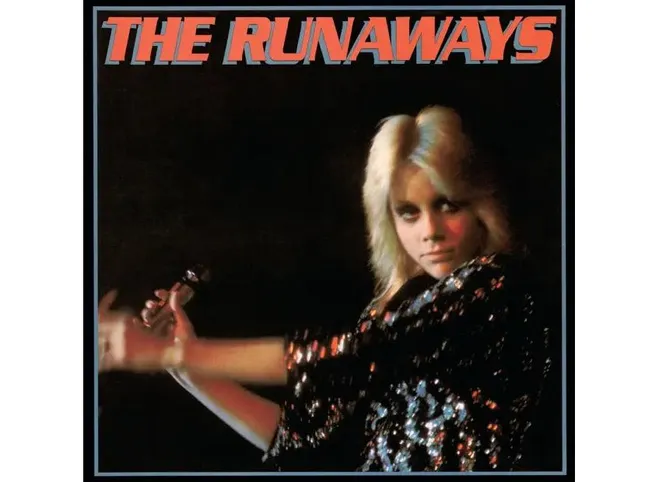
In 1976 rock is still an almost exclusively male territorymade up of excesses, virtuosity and imagery built around charismatic figures who speak above all to an audience of men. Into this scenario the RunawaysLos Angeles teenagers who record their debut album in a few weeks and they publish it on May 17th, bringing with it something that is not just an aesthetic provocation but a real change of perspective. They are not the first women in rock, but they are among the first to occupy that space as a compact band, with instruments, attitude and direct language, without mediation. The formation’s first album becomes like this one of the few hard rock records of the time entirely by women and, without explicitly wanting it, contributes to open a crack that punk will soon widen.
The sound is simple, urgent, built on essential riffs and on writing that does not seek refinement but immediate impact, and precisely in this choice we sense an instinctive closeness to what was about to happen. “Cherry bomb” is the clearest example, opening the record as a short and brazen explosion which overturns the point of view with which rock had described desire, putting in the center a female voice that does not ask permission. “Hey, street boy, want some style? / Your dead-end dreams don’t make you smile / I’ll give you somethin’ to live for / Have you and grab you ’til you’re sore”: each verse of the single comes as a challenge, playing on the allusive and mischievous side of the adolescent rebellion phase that Cherie Currie he sings in the listener’s face without mincing his words. Around the singer, Joan Jett begins to imprint the sound of his guitar on history, followed by Lita Ford and from the battery of Sandy West. On the bass there would be Jackie Foxexcept that in the album recordings the instrument is played by Nigel Harrison following the decision of manager Kim Fowley, who preferred not to entrust her with that part in the studio.
Immediately after, “You drive me wild” widens the scope with a more bluesy and sensual groove, while “Is it day or night?” and “Thunder” show how much the band still looks to classic rock, between Deep Purple and glam, but with a dirtier and less controlled energy. Even the cover of “Rock and roll” by the Velvet Underground, entrusted to the vocal interpretation of Joan alone, is not a reverential homage, but a harder and more instinctive rereadingalmost as if wanting to bring that song into a more physical and less intellectual imagination.
Side B consolidates the identity of the Runaways without ever seeking a real turning point, but working towards an accumulation of tension. “Lovers” and “American Nights” hold together immediacy and structurewith riffs that remain imprinted and a writing that already looks at the form of the song as a possible single, while “Blackmail” brings everything back to a more direct terrain, made of rhythm and guitars, with Joan Jett demonstrating a natural instinct for the groove and for the construction of songs that work without the need for superstructures. “Secrets” slows down the pace slightly, but maintains that atmosphere suspended between innocence and provocation that runs through the entire album.
The closing with the seven minutes of “Dead end justice” is perhaps the most surprising moment, arriving with a long and narrative song that breaks the linearity of the album and introduces a different idea of storytelling, between dialogues, changes of rhythm and an almost theatrical dimension. “You like drugs, you like brew / You wouldn’t believe what I may do to you”, is the youthful shamelessness on which Joan Jett and Cherie Currie play together. It is an ambitious, imperfect but significant attempt, because it shows a band that, despite a fast and guided production, tries to go beyond the form of the short and immediate piece. In this sense, the album constantly lives in balance between external control and internal urgency, between the hand of Kim Fowley and the personality of the musicians, which still manages to emerge.
Fifty years later“The Runaways” remains a fundamental album not so much for what it is in the strict sense, but for what it made possible. It’s not a perfect album, it wasn’t even a commercial success at the time of its release, only narrowly entering the “Billboard 200” reaching only 194th position. But it is a breaking point that opens a path, proving that a band of women can play rock with the same force, the same immediacy and the same ambition as anyone else. It is there, in that direct simplicity and in that still immature energy, that we can already glimpse the future, in which rock not only changes its sound, but also its voice and body. Although the colleagues and the various other personalities who took turns in the lineup also continued their careers, with the exception of Vicki Blue and Jackie Fox, within this trajectory, The figure of Joan Jett stands out above all. From that nucleus, the guitarist and singer would carry forward that idea of freedom until she founded her own independent label, becoming one of the first women to directly control her own music and transforming that initial urgency into a solid and influential career, capable of leaving a profound mark on the rock of the following years.