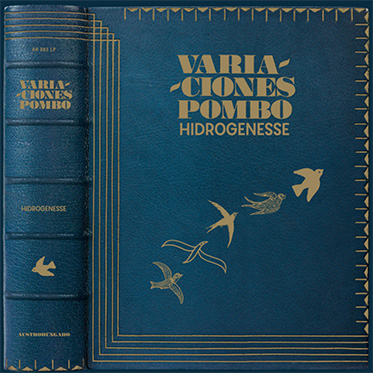
Review of ‘Variaciones Pombo’, the new Hidrogenesse album
If Serrat had Machado and Morente made Lorca his own, then Hydrogenesse It was up to him to do the same with Álvaro Pombo. Far from falling into the solemnity that is usually attached to this type of musical tributes, Carlos Ballesteros and Genís Segarra find in “Pombo Variations” his particular playground, translating the meter of the famous Cantabrian author into the most sly and pizpireto pop like no one dared before.
It is true that, at this point, we naturally attribute to the executing duo an ample capacity to shock us, and even more so after having seen them turn Alan Turing’s tragedy into a kind of sentimental biography between machines (“A dubious binary digit”,12), design the definitive score for the romantic-dream duel (“Daniela Forever”,25) or create the ideal electro-Catholic repertoire to combat the apocalypse (“The house smells like glory”23). But they still manage to beat any odds.
They use here a record with a spine, adhered to the coordinates that Pombo himself drew to open and close his poetic anthology, to recredit for the umpteenth time his proverbial skill with melodic gifts. Between winds with orientalized features and martial percussions, they cover the author’s first attack with a twilight manuscript that outlines the main lines of a constant love for the mortuary without pomp or pageantry (“Registry of last wills”). Nor are ceremonies granted here to the reaper, since we already know well that this “commas and axes are missing.”
Even with the evident affinities between both parties (the intellectual flight, the syntactic self-confidence, the taste for jokes and their hyperbolic customs), it is no small thing that Carlos and Genís have managed to lighten the very free and convoluted bill of Pombo until turning it into a delicious pop artifact that calls for movement and jokes. It is a huge incentive to discover little by little the musical solutions with which the duo spices up each poem, sometimes leaning towards landscapes of domestic science fiction and spatial phantasmagoria (“Illegible is the sun”) or surprising us with carpetovetonic and berlanguian fanfare to address the most intimate twists and turns of the narrator (“Tacky and Martyr”)
Although not all the pieces are equally memorable or immediate, they elegantly avoid the risk of turning each song into a simple and crowded recital of verses using eighties timbres (“I’m not from this city.”), administering the words with playful inventiveness (“The trees coincided with you every day, With you every afternoon, in the afternoon, they coincided with you every afternoon / The bus was late, every afternoon and you were late”), extracting a chorus from the most unexpected variation (“We pray to you, sir, that the jar contains the water.”) or directly signing some of his most catchy pieces, which is not saying something (“Imagined is everything”). Hydrogenic trickery once again makes heterodoxy its best and most recognizable currency.