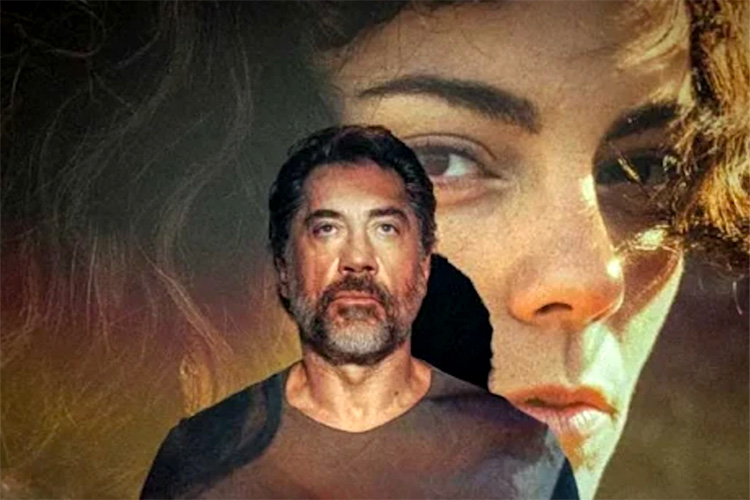
Review of ”The loved one” by Rodrigo Sorogoyen, which opens in theaters today
I was recently speaking with the protagonists of “Blue Film” about the decline of film festivals, and how far they (paradoxically) can be from the seventh art. All the paraphernalia around movies often detracts from the art itself, instead of stimulating it. And this, which is something that appears in “The loved one”you can also have a meta point here. Because I am sure that there would be much more talk internationally about “The loved one” of not having almost coincided in Cannes with “Sentimental value” (any raised eyebrows regarding his resemblance disappear when watching this film, but that doesn’t matter once the current of opinion is formed) and of not having agreed, now without the almost, with “The Black Ball” – regardless of its quality, there are other factors that make it the runner on which the heavy machinery has clearly opted.
The biggest claim of “The loved one” of Rodrigo Sorogoyen For the public it could be the interpretive duel between Javier Bardem and Victoria Luengo, and in that sense it does not disappoint: it already starts strong with that cold opening of almost twenty minutes between the two, and every scene they share is something to be amazed at. But this is much more than a showcasing vehicle for its actors, and an example is that it contains perhaps the most tense sequence shot by Sorogoyen, which is no small feat… and without the need for a single shot or (physical) violence. A sequence that, according to what the director told us in the interview that we also published, took five days to shoot.
“The loved one” It is his first 100% drama feature and he doesn’t have any tricks up his sleeve in the form of a twist: he wants to tell us about the relationship between this daughter and this father, and that is what he does slowly throughout the entire film. It concludes in a double ending that gives us one of the most intense sequences he has ever filmed (those who say that his cinema is cold, I am not sure if they will continue to think the same), and that would not work as well as a climax if it were not sustained throughout everything preceding by an exquisite script signed, as always, between him and Isabel Peña.
The excellent portrait of its main characters also gives us one of the best and most realistic portraits of cinema that have been made in our country, with formal games in this regard and again with magnificent photography and soundtrack by its regulars Álex de Pablo and Olivier Arson.
In short, “The loved one” It is one of the best works of its director (for those who write this, the best after “The Kingdom”), and this has even more merit being a terrain with zero thriller units and which, in other hands, would have been a story told a thousand times. Sorogoyen commented to Variety that “The main word I repeated to myself while conducting it was unmistakably ‘experiment’”. Well, experiments are welcome.