Nuclear Tactical Penguins: Pop is also learning from rap
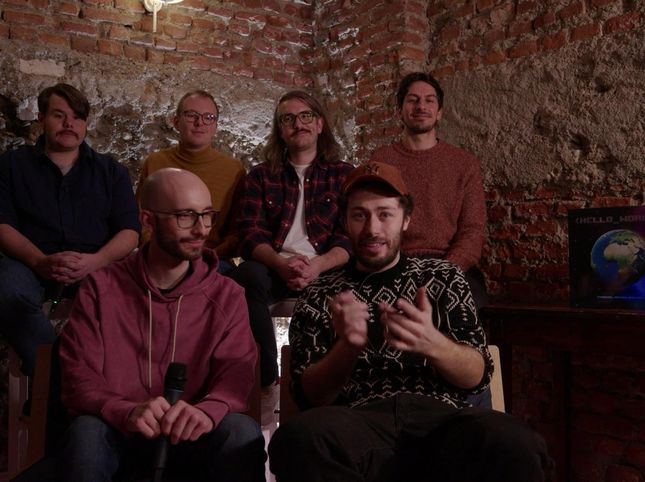
It’s only pop, but we like it, one could say paraphrasing a famous song. But no, it’s not just pop: the new album by Nuclear Tactical Penguins hides in plain sight an enormous quantity of ideas and stories, often anything but “light”. It is an open, melodic record, played in a direct and clean way (early Coldplay comes to mind at more than one moment), which combines the classic themes of pop – love, nostalgia – with reflections on important social issues: education to affectivity, pressure, burnout – and it does it in ways that are anything but trivial. At a time when pop is back at the top of the charts (they, but also Cremonini, who went to number 1 in both singles and albums), the Pinguini explain that all this also happened thanks to rap. Here is the interview with the band.
Presenting the album you talk about “Hello World” as your new world: what has changed in the world of Penguins in the last two years?
Riccardo Zanotti: First of all, we did our first stadium and big arena tour in 2022. We have seen and experienced firsthand how much our audience has changed even during the pandemic. During Covid we didn’t know what we would find outside, but instead an explosion of affection reached us.
From there the concept behind our new album was born Hello World: trying to bring together many people, as if it were a large caravan, a large family.
It may seem trivial, but it is very important to us.
One of the stylistic keys of the Penguins, and also of this album, are quotes – direct and indirect. What do they represent for you?
RZ: Quotation is a very powerful element for a songwriter. When you write a song and quote something in a few words or lines, you can give an impression, an idea, without doing all the work. If you quote something, someone on the other side will understand: a sea of meanings can be condensed into a simple word.
In this period there is talk of a sort of “pop’s revenge” on rap: at the top of the charts are you, Cremonini, Olly, Alfa. Is it really like that?
Lorenzo Pasini: More than a revenge of pop on rap, I would say that pop has changed. If we take artists like Olly, Cesare Cremonini or us, everyone has a very different way of making pop.
I would say that pop has also slowly learned from the lessons of rap and, in this way, has expanded. Whether this moment of glory of pop over rap will continue, we will find out over time.
This time too you made a record without collaborations or featuring. You’ve done some, but outside of Penguins or outside of albums. How come? Have the featurings become too industrial or have they never attracted you?
RZ: As a songwriter I often collaborate with other artists or bands, but when it comes to the Pinguini universe, the fact of being six of us is like a walking featuring. In fact, there are 5, 6, 7, 8, 9 walking features, depending on who you talk to. This makes it more difficult to work with external people.
We’ve done it in the past, I think Bresh or Hernia, but it’s a little rarer. We live with a different modus operandi: we are still very tied to our reality in Bergamo, in the province. We meet in the rehearsal room, I write things in the room, then the next day we rework them together. We don’t demonize featurings, but we often don’t feel the need.
Speaking of industry mechanisms, in “Burnout” you talk about the mental health of artists. Are we exaggerating with the pressure and obsession with numbers?
Elio Biffi: Probably yes, in music and in general in our society. We are exaggerating with the pressures, expectations and requests for perfection, extreme quality and quantity.
We believe that society should reflect on these issues and understand that squeezing yourself to the bone for a result, which who knows when or if it will arrive, is perhaps not the best way to approach the job. We prefer a slightly slower life, in music as in work.
Riccardo, you said that, when you write, you also think about how songs can work on social media, about what can become viral. Is it still like this?
RZ: When I write, I always consider all the realities in which a song will have to live: live, social, radio, TV. Social media is perhaps the most difficult to understand, at least for me. It also depends on the social network you analyze, because I know some better than others. I realized that trying to predict virality is impossible: there are too many variables, the algorithm is inscrutable.
However, you can try to write songs that stand the test of time. Maybe they will never go viral or maybe they will, in twenty years. The case of Cesare Cremonini and Luca Carboni a few days ago is emblematic. Writing just to go viral is reductive.
How will you bring these songs to the stage?
LP: We will try to bring what we learned two years ago in our first stadium and arena tour, but in an even improved version. New sets, new music and many pieces that we have produced in recent years.
We often talk about the intrusiveness of cell phones at concerts. When you think about touring, do you take into account that some of what you do will be filmed and shared immediately?
RZ: Always taking sides against modernity makes no sense, because then it overwhelms you while you are closed in your stilt house. So cell phones are welcome at a live show, it always depends on how you use them. The flashlight, for example, is different from standing there to film the whole concert.
I find it poetic when people film to make a video call and show the concert to someone who maybe is in hospital or couldn’t attend.
There are many ways to use technology. Hello World he talks about technology in a non-demonizing way. Humans still have the power to decide the direction of technology and how to use it. We must not oppose progress, but try to ride it in the right way.