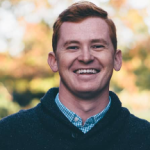
Johnny Marr and the Manchester rock renaissance
“Speaking of reunions,” I ask Johnny Marr, “When are Electronic coming back?”
The legendary Smiths guitarist, accustomed to being asked when he will make peace with Morrissey, bursts into laughter. In the new live album and in the tour that will take place in Italy on November 6th in Milan and on the 7th in Bologna, the setlist also includes songs from his other band, Electronic: formed in the 90s with Bernard Sumner of New Order, they also collaborated with Neil Tennant of Pet Shop Boys who is present in the live album. “We talk often. Maybe we should stop talking, and maybe start making some music together,” he says. While there is no hope for the Smiths: Morrissey wants to sell his shares in the ownership of the brand and the repertoire: “I believe it when I see it”, comments Marr. “And anyway it’s his decision. The world is big for both of us.”
In this long chat, Marr talks about his career between the Smiths and his solo career, his new collaborations – he appears in several songs on Gorillaz’s next album – and the importance of Oasis’ return. “A band like this could only come from Manchester. In a time of division, people wanted to see two brothers embracing on stage.”
Why a live album today? What do they represent, in your opinion?
I still like live albums like when I was a kid, they’ve always been a special listen for me. I published one about ten years ago, it went very well: they are useful for letting people know that I give good concerts.
When I was young I was obsessed with the recording studio, with working with people, with collaborating, with learning to produce. When I started putting together my own band and building something of my own, the aspect of playing live and fronting was almost a new world to me.
Did it take you time to feel confident as a frontman and not just a guitarist?
It took me a while to learn how to actually do it. About ten years ago I discovered I had a new audience, something I wasn’t at all sure of. I started writing new songs simply because I had songs that I didn’t want to give to someone else to sing, and I didn’t want to join another band, but I didn’t know if I was going to play in front of 300 people or 3,000. And instead it went surprisingly well. Press and media supported me.
Today, being on stage and singing is no longer a problem for me. Two weeks ago I played with Damon Albarn and Gorillaz, just on guitar, and last week I did a song with the Black Keys, again just as guitarist. It’s fine for some songs, but if I’m not singing I feel like something is missing.
In the album and in the concert setlist there are songs by the Smiths, soloists, covers and also by Electronic, your band with members of New Order and Pet Shop Boys. How do you find the balance between these parts of your career?
I just try to think like a fan. Anyone with a career as long as mine will tell you that it’s a privilege to have songs that are a part of people’s lives — and it’s absolutely true. You’re very lucky if you have songs that people still want to hear thirty years later.
The Smiths songs are a big part of what you play.
Yes, and they are not that easy to do. They’re not easy to play and they’re not easy to sing, not everyone can do it. Obviously, since I wrote the guitar parts, it’s no problem for me to play them, but I performed “There Is a Light That Never Goes Out” and “How Soon Is Now?” with various different singers and guitarists. My band does a really good version of it, but it’s not easy to do without sounding “wrong”. I want to show respect to the fans: I will never be that guy who refuses to play old stuff.
There is a wave of young singers rediscovering the classics of the 80s and 90s through collaborations — I think, for example, of Olivia Rodrigo singing with David Byrne and Robert Smith. You worked with Billie Eilish. Do you think there is a connection between your generation and those of new artists? Or is it just positioning?
I may sound like a bit of a hippie, but I truly believe that true inspiration flies across decades and generations like an arrow. Really, whether it’s classic rock, the Doors, Bob Dylan, jazz or cinema, if a work is inspired it will always be interesting to a generation of people who are looking for something real.
In the world we live in, in this digital world, the timeline no longer exists, the context no longer exists. Anyone who listens to my music with the Smiths, or anything else, hears it as if it were a band that could have existed yesterday.
Some of the music I made still works today. Whether it’s The Cure, Depeche Mode or The Smiths — if there’s inspiration and a unique sound in that music, today’s generation picks up on it.
Is there anyone from the new generation you would like to work with?
I was lucky: in addition to Billie Eilish, I received several invitations to collaborate with musicians of the new generation. And if I like the sound of an artist, then I do it. But I wouldn’t do it just to seem relevant.
Several generations met this summer also thanks to Oasis concerts. Have you gone to see them?
Yes, of course, because Noel is a friend of mine, I couldn’t miss it. There’s a whole great narrative around the Oasis reunion, which has to do with finding each other and brotherhood. People wanted to see two brothers who love each other again.
At a time when everyone faces division, hostility, corruption, bad politics — I’m speaking from a UK perspective — it brought a positive feeling across the country all summer.
A big part of this is also Noel’s message and melodies, which people identify with. Other bands like Radiohead, are well respected, loved and popular, but they have a different, more intellectual message.
Do you think this is also a good time to recognize Manchester’s role in music once again?
Manchester’s style and history — whether it’s The Smiths, The Stone Roses, New Order or Joy Division — are strongly represented in Oasis. They could only have come from Manchester, without a doubt.
Speaking of reunion, when will Electronic get back together?
(Laughs..) Well, I talk to Bernard (Sumner) a lot, and I also talk to Neil Tennant and Chris Lowe a lot. Maybe we should stop talking so much, and maybe start making some music together! In the new live album there are several songs from that period. The truth is that in 2025 I collaborated quite a bit — it wasn’t planned, it happened by accident. I recorded a song with Franz Ferdinand, then I worked on the new Gorillaz album, and I’m writing for Blondie. I’m also working with Nile Rodgers a bit… so I guess I have to go back to my day job, otherwise my band gets mad!
You play on several songs on the new Gorillaz album. How did this collaboration come about?
Damon was already working on the record and had a song in mind that he wanted me to play on, he thought I would be good on it. When I got to the studio, he kept playing me more songs… and I was like, “Okay, I’ll play on this one too. And this one too.”
I think Damon has a very interesting process: a big part of Gorillaz, as you know, is about collaboration, about bringing other people in to do certain things. But then he takes a step back and leaves the artist total freedom.
You seem to have a very peaceful relationship with your present and your past. I have to ask you about Morrissey, who instead said he wanted to sever all ties with the Smiths and sell his every stake in the band’s repertoire and brand. What do you think?
I’ll believe it when I see it. And if it happens, it’s his decision: I don’t care in any way, it makes no difference to me.
I always thought the world was big enough for Morrissey and Marr. There are much more important things happening in the world.