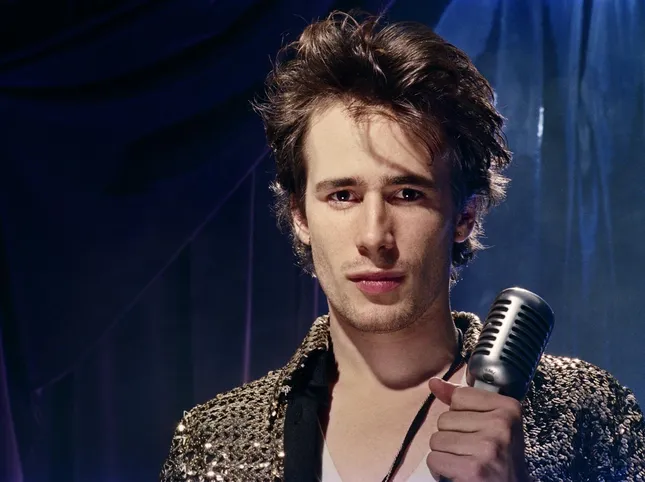
Jeff Buckley’s story is never over
It has been lost count of how many times Jeff Buckley’s story has been told, and of all the stories that have connected to his short life, which ended tragically almost thirty years ago in the waters of the Mississippi. There are stories that arise from below, such as the recent one of the return of his music thanks to TikTok, and those that arise from the world of the media which periodically rediscovers him in TV series, talent shows and similar contexts. Then there is the official story: of which the mother Mary Guibert is the narrator and central character, who manages its material “legacy” – record releases and archives – and symbolic. It’s no coincidence that I preferred a documentary to a bio-pic. “It’s Never Over: Jeff Buckley”, directed by Amy Berg, arrives in Italian cinemas on March 16, 17 and 18, after having aired on HBO in America. At the same time, the re-release of Live at Sin-é”, the debut EP from 1994, which was also released on vinyl for the first time, and in the expanded version from 2003 – i.e. 2 CDs and 4 discs.
The film reconstructs a story that has been told countless times: in books, articles, videos, documentaries and record reissues. Finding perhaps its most complete and definitive form: “It’s Never Over” is in fact an authorized biography, built from largely unpublished archival materials from Buckley’s personal archive, but above all through the voice and presence of his mother Mary Guibert. She is the second protagonist of the film. And she questions herself: one of the most interesting anecdotes is the one in which she remembers having intervened in a fan forum to defend her son, and Jeff got very angry, not speaking to her for months.
The documentary follows the now well-known arc of his story: his birth in 1966 in California, the complicated relationship with his father Tim Buckley, a cult musician who died when Jeff was still a child, a few weeks after their only meeting after one of his concerts. Then the arrival in New York at the beginning of the nineties, when the young singer-songwriter made his name at the small Irish café Sin-é, where Buckley built his first legend: almost improvised concerts, just voice and electric guitar, which attracted musicians, record companies and the curious. From those evenings the EP “Live at Sin-é” was born in 1993, his debut album. Among the testimonies, the film curiously leaves out that of Glen Hansard, then a young actor-musician known for his role in “The Commitments”, who brought Buckley to that café.
The next step is “Grace”, released in 1994: an album that is today considered a classic, but which at the time had limited success, more among critics and in Europe than in America. However, Buckley also gained enormous credit among his fellow musicians: Robert Plant, his idol, defined him as one of the best living singers. It was one of the many elements that increased the pressure towards the creation of the second album, which will never arrive, except posthumously and in the form of “Sketches”. In 1997 the singer drowned in the Wolf River Harbor, a tributary of the Mississippi, in Memphis. He was thirty years old and working on his second album. Among the strongest theses of the film is precisely the one relating to death: it reiterates that it was a drowning – even if there are still those who believe drugs had something to do with it, but Buckley had only drank a beer that evening. An impulsive gesture, like others in his life: diving into the water while dressed. But that was fatal.
Amy Berg reconstructs this story with great philological attention, weaving together private films, audio recordings, photographs and testimonies of those close to him: his former bandmates, his former companions Rebecca Moore and Joan Wasser (Joan as Police Woman), musicians such as Ben Harper and Aimee Mann. Among the most touching materials is also the last voice message left by Buckley to his mother on the answering machine. In some moments it is inevitably hagiographic, but in general it tries to convey the human and artistic complexity of Buckley, and how he suffered all the pressure and expectations he felt.
“It’s Never Over” confirms that Jeff Buckley’s story is never truly over. Not only because his figure continues to generate new stories – films, books, record reissues. ;a above all because his music continues to reappear in the most diverse contexts. In the end the film also suggests something else, that the true biography of Jeff Buckley lies not in the films or books, but in the songs he left us.