How the music of the White Stripes now arrives at the Teatro alla Scala
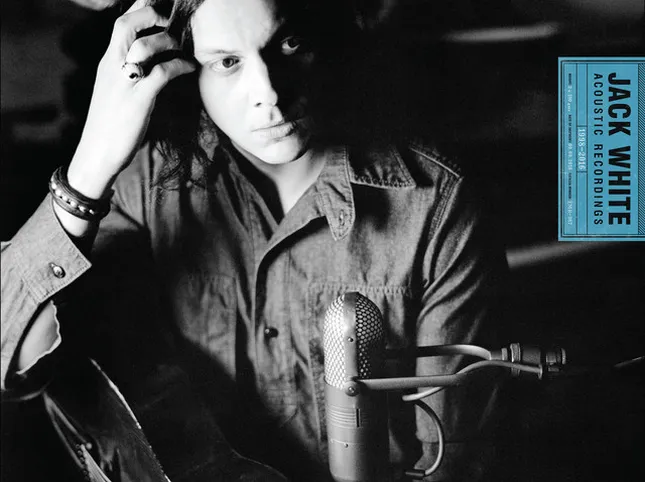
The poster of the Teatro alla Scala for the triptych “McGregor / Maillot / Naharin“, on stage from 18 to 28 March, brings back the music of “Chroma” the names of Joby Talbot and Jack White III. The first is a British composer, born in 1971, capable of naturally crossing different territories, from concert music to soundtracks, up to pop arrangements and creations for dance; the second is much better known as half of the White Stripes, the duo that in the early 2000s rewrote the coordinates of essential rock. If it is true that jazz, pop and rock have also inhabited opera houses for some time, especially through the ballet, there is always something surprising in the finding the name of a rock star next to that of a contemporary composer in a Scaliger poster, as if two apparently distant traditions found an unexpected point of contact.
When rock turns into classical
To understand how the White Stripes’ music found its way into a ballet“Chroma” we need to go back over a decade and to a project which, already in the title, declared its hybrid nature: “Aluminium“. The idea was born from Richard Russellfounder of XL Recordings, who questioned a once widespread practice, that of transforming rock songs into instrumental versions, and how this tradition had progressively been lost, often leaving room for anonymous results, devoid of tension. It was Joby Talbot who picked up that suggestion, who was already active in classical and pop music at the time. In an interview with the Guardian in 2006, Talbot said: “Russell was reflecting on that old tradition of making instrumental versions of rock songs, wondering why it’s not done anymore. When you put the orchestral world and the rock world together, you usually end up with a kind of bland, anemic Muzak. Our goal was to avoid it at all costs“.
The composer – former member of the band Divine Comedy, and who at the time had already written for the cinema – among other things – the music for “The Hitchhiker’s Guide to the Galaxy” and who in 2011 would then sign one of his most ambitious and acclaimed works by composing the score for the ballet “Alice’s Adventures in Wonderland” – therefore decided to avoid any decorative effect and instead build a real rewriting devicecapable of transport the songs of the White Stripes into an orchestral universe without emptying them of their urgency. They were born like this ten arrangements who were not looking for loyalty, but a new identity. “Some of the songs sound like lost soundtracks to strange silent films from the 1920s,” Talbot explained to the Guardian: “Others are reminiscent of scraps from a John Ford western, and still others are simply beautiful, hypnotic chill-out music. Let’s hope it’s something impossible to label“.
The one implemented by Richard Russell and Joby Talbot was an operation that immediately convinced Jack White himself, who gave his approval to the project after listening to some tracks, provided that a essential approach also in production. “Jack thought it was fantastic and kept saying it was a great honor,” Talbot revealed: “He only had one request: we couldn’t move to a more elegant studio. We had to do everything in our neighborhood of Wapping.”
Published in 2006 in a limited edition, with print runs that recall Jack White’s numerological obsession with the number three (3,333 CDs and 999 LPs), “Aluminium” thus became a successful experiment of crossing languages. It is precisely from this material (also available for listening digitally, here) that Wayne McGregor he drew upon when, in the same year, he was commissioned to create a new ballet for the Royal Opera House in London.
To give shape to a creation that is rooted in the physicality of movement and its ability to translate the deepest tensions into gesture, McGregor chose to draw precisely from that material born with “Aluminium”, identifying in Joby Talbot’s orchestral reinterpretations the ideal point of contact between rock energy and choreographic construction. Three of these transformations They thus enter the ballet score, alongside the original compositions of Talbot himself, helping to define a layered and pulsating sound fabric, in which the essential language of the White Stripes is transposed into an orchestral dimension without losing its urgency. Rock and contemporary music end up merging without hierarchies, fueling the choreographic writing with a constant, almost physical tension, as happens in the rereadings of “Aluminium” from the White Stripes 2001 album “White Blood Cells,” by “The Hardest Button to Button” from 2003’s “Elephant” – the album of the hit “Seven Nation Army” – and “Blue Orchid” from 2005’s “Get Behind Me Satan”.
Chroma at La Scala
Almost twenty years after its debut in 2006 in London, “Chroma” now arrives on an Italian stage for the first time and it does so at the Teatro alla Scala in Milan, bringing back with it that same original tension between different worlds in an evening that also includes “Dov’è la luna” by Jean-Christophe Maillot and “Minus 16” by Ohad Naharin.
Even at La Scala, the music of the White Stripes, filtered through the work of Talbot and orchestrated by Christopher Austin, is not a simple quotation, but supporting structure of a choreography that thrives on contrasts, gaps and accelerations. The opening on “Aluminium” immediately sets the tone, where the energy of rock is translated into physical impulsein movement dynamics. Alongside the arrangements and reworkings of Jack White’s songs, there are Talbot’s original compositions – “Cloudpark”, “A Yellow Disc Rising from the Sea”, “Transit of Venus” and “Hovercraft” – which help to build an ever-changing soundscapein which the boundaries between genres dissolve. It is onto this material that McGregor grafts his choreographic writing, made up of broken, off-axis lines, sudden tensions and deforming geometries, finding a visual counterpoint of rigorous essentiality in the minimal space designed by John Pawson.