Bernardo Lanzetti: “I held Ornella’s hand to give her courage”
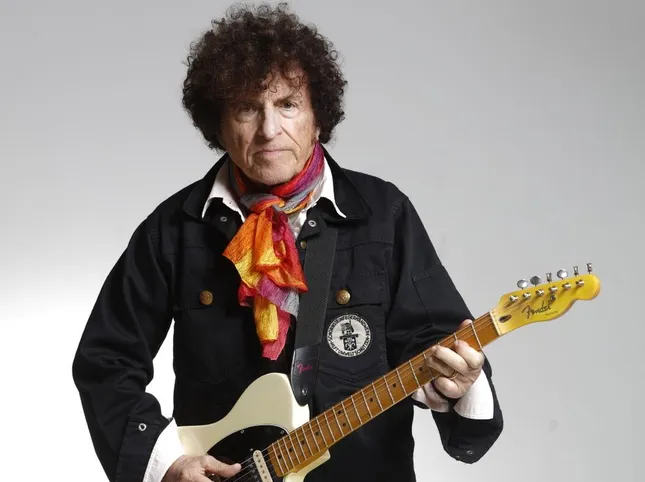
The voice is one of those that have made history, bringing Italian progressive rock to the highest international heights. Bernardo Lanzettihistoric frontman of PFM in the Seventies, returns to explore new sonic horizons with his latest album, Chasing the Master.
It is a work that escapes easy labels: a transversal mosaic in which rock, pop, symphonic blues veins and two new versions of songs originally written for Ornella Vanoni (Don’t go And Shadows waiting). Behind an apparently more accessible structure, a profound compositional research is hidden: Lanzetti’s prog DNA emerges not so much in the expansion of the suites, but in the musical illusion, in that aptitude for manipulating accents to subvert the listener’s expectations. He explained it himself, revealing the behind the scenes of a writing that never stops challenging the rules:
I don’t know how many will notice, but… Beloved song there are some prog characters. The album isn’t exactly prog because the songs aren’t long, they have the classic song format, but believe me, the research behind it… I’ll give you an example. In Shredsthere is a particular instrumental phase: many musicians and drummers have asked me if it was an odd tempo. I said no, it’s an even tempo that seems odd, while in prog we tried to make odd tempos seem even. I’ve reversed the rule, but there’s always a bit of prog.
“Chasing the Master”. Who is the Master you chase?
I start from my condition as an author: I want to present myself as an author because I have found a key to being able to write lyrics and music inspired by the great masters, who I will never be able to get close to. The artist has a lot of things in his drawer, the problem is how to organize them. And sometimes the masters unconsciously tell us how to do it. They prepare the ground and so the words and music can fall into place. It is clear that reaching the master is never feasible because the master is always ahead of us. But research is part of artistic life.
So there is no specific name.
If we talk about the lyrics, I grew up with the lyrics of Bob Dylan, of Leonard Cohen. Springsteen is a contemporary, so I didn’t grow up with him, but I also measured myself with him. But also with the great poets of the past: when I was in eighth grade, I was struck by Ungaretti. Every now and then it still occurs to me that it would be nice to be able to make minimal music by inserting Ungaretti-style lyrics. The avant-garde has always fascinated me. An artist who works with music must speak with the music: it’s not enough to say that a song is about a motorbike speeding down a highway. The music must describe the speeding motorbike. And it’s certainly not easy, but many avant-garde artists have succeeded and are still succeeding.
You like to experiment with your voice: you even have a very particular glove for doing it.
Yes. The microphone has a problem: it also picks up other sounds around it. So to isolate the sounds of my voice I invented this glove with sensors, with a switch: I place it on my throat, I open the switch and only the vibrations of my throat are picked up. Lately I’ve been experimenting a lot with my entire vocal system. I have been told by some scientists and teachers that I have an elasticity of the vocal apparatus that is unusual for males over 55 years of age. Now I am 77 and therefore I have dedicated myself even more to the study of harmonic singing, cultural singing and I have discovered that I can do things I had never dedicated myself to. I have all the sounds, from low to high, but I don’t know what to do with many. I’m in contact with several young people, passionate about this type of vocality, to see if we can do something together. They are better than me because they have been studying for a long time, but I do things that they are not capable of doing. So we trade at this level.
Many artists today return to playing in the frequency of Mozart and Verdi, the famous 432 Hertz. Do you believe in the healing power of music?
Yes, I believe it. But it’s a problem when you go to record, because you use mediums that cancel out the care a lot. It’s much more effective to do it live. The healing power of music and also of singing – both for those who sing and for those who listen – is an objective that I intend to pursue, because we are detached from any type of market, from any type of criticism. We carry the instrument with us every day, we can practice, we can improve, we can compare ourselves without filters and without frills. I would recommend it to anyone who is passionate about singing.
You participated in The Voice Senior. Do talents still work?
I participated because I had already been asked, years ago. This time my wife said to me “come on, let’s try to go…” and my arranger and producer friend said to me “yes, but watch a few episodes first”. But I haven’t had a television for 15 years, I can’t watch these things that depress me. So I went there very innocently. In an interview off stage they asked me what I thought of the show: I said that in my opinion it was not a show about music and that we were not singers in the show, but actors who played the part they had chosen for us. I thought I said something very intelligent, but instead I was cut off. But it’s always positive when you sing live.
In your album there are two new versions of songs composed for and performed by Ornella Vanoni.
I have very beautiful and friendly memories of Ornella. For a while I dated Ivano Fossati. I also worked on his album Ventilation. At the time I gave him a cassette of songs I had written that I didn’t know how to use because I was still very much into avant-garde and prog. He played it to Ornella and they chose two pieces. They called me to Milan, to Ornella’s house. We looked carefully at the words, because the texts were masculine, here and there some adjectives had to be changed. At a certain point, when the phrase “you find me alone in the kitchen staring at the gas flame” arrives (in Don’t goed.), she looks at me and says: “But how do you know that I do these things?”. And then she had a few stories and anecdotes about when Dalla and De Gregori went to visit her in that same house. But perhaps the best thing was when she auditioned to sing the songs in Italy before going to England (because they recorded the album in England, with an English arranger). For Don’t goshe told me to join her in the room, next to the microphone stand: “Hold my hand, because this piece seems easy, but it’s not that easy. This way you give me courage.” Then I held her hand. She was dressed very rock, in leather, with stiletto heels etc. It was very emotional.
You were the voice of PFM in the years when prog was at its peak.
I have wonderful memories, especially of the first two years. I arrived three days before we went into the room to record Chocolate King. In truth, they had already called me months before, but I had the album Mass Media Stars of the outgoing Acqua Fragile. I asked for a week to make a decision, the band got offended and decided to dump me and call Ivan Graziani. Ivan Graziani at the time was not the singer-songwriter he would later become, but he was still a good guitarist. They worked with him for six months, then, three days before recording the album, they had second thoughts, they called me and I went to Milan. I only had my wallet and brush in my pocket, because I had long hair, as was the custom back then. I stayed in Milan to work with them and my live debut was in Tokyo the following December. Then Great Britain, United States. The next album, Jet lagwas a concept entirely developed by myself. Then I went back to singing in Italian and we got to Passpartùbut already on that album they put me aside a bit, also taking advantage of the fact that when we had to prepare the auditions I had the flu and couldn’t go to Milan; they sang, so the keys were all not right for me.
In the Seventies prog spoke to everyone, today it is a niche. Isn’t today’s audience more educated in listening?
Yes, that’s true. There is also a generational fact: each generation fights to have its own music, to have its own stimuli. Prog was music that still made you think, it had references to classical music, to certain forms of avant-garde jazz. The lyrics were also complex, we tried to deal with topics in a different way and therefore listening was a ritual. Today there is still the niche, but it is true that the new generations want to talk about something else, this music is too complex and they have to consume it more quickly. They say that music belongs to everyone: I don’t want to deny it, but some music is for those who apply themselves. You can’t expect everyone to be able to understand Stravinsky, or King Crimson, or certain songs by Genesis, by Van der Graaf Generator. To appreciate them, you need to be prepared or want to prepare. Even I didn’t always understand everything, it’s just that sometimes if I heard music that I didn’t understand I tried to find a way to understand it. Today’s audiences want to sing the songs, but for me it’s an offense. If I go to listen to a singer I have to listen to him, not the one who sings out of tune and distorts everything. But it is undeniable that concerts are popular because they work like this: you don’t go to listen to a singer, you go to sing with him. Who am I to reject this?
Speaking of generational comparisons, there is a track on the album called Boom boomers.
Usually i Boom boomers they reveal themselves when you have to fiddle with your phone or apps. But it is undeniable that the boomers had wonderful music, or rather a series of music. Do we want to talk about singers? The singers’ models are all from the 70s now, there is no one who became a master of singing after the 70s. I kid ourselves a bit, but it’s undeniable that we were very lucky. When I arrived in the United States at 16, the first song I heard on a car stereo was Like a Rolling Stone by Bob Dylan. An experience that I don’t know how many can repeat today, even with other artists or other means of communication. Except that after all this luck, now I’m faced with a world that not only doesn’t like me, but that doesn’t like me.
Are there a shortage of teachers today?
Yes, today there is a lack of teachers. Or we simply fail to recognize them in the little things. In my album I write with the guitar and I remain a strummer, but I have some very valid guitar ideas and when I can’t play them I call the good guitarists who are a bit disconcerted because they say “but this is an anti-guitar idea”. I ask them to do it anyway and in the end they tell me it works. In the album there is the guitar writing, there are more or less profound Italian lyrics and there is the voice. I will tell you that singing in Italian is not so easy compared to singing in English, because we vocalists grew up with the English language as a primer and the Italian language sometimes needs contrary rules, because if you apply what you have studied in English you become ridiculous. After singing this album, I have more respect for some Italian singers who know how to sing well in our language.
If you don’t like the world and vice versa, what inspires you?
Inspiration is in the head, in the spirit that revolves around the head and I repeat the theory of the artist who has things in the drawer: one doesn’t notice, but he puts things in the drawer. You have to have the moment to take them out, they come out and get all in position. I’ll give you an example. Years ago, with the Volpini Volanti group we went around Milan in their van and it was raining. Stopped at the traffic light, I saw Loredana Bertè kissing a handsome boy in a white shirt under the tent of a tobacconist’s bar where the boys took refuge. I just watched the scene. Years later they asked me for a song for Loredana. The drawer opened and these words came out: “Outside the tobacconist bar / I hug you tightly” (incipit of A rainy eveninged.). I didn’t realize I had registered them in my head, but they remembered to come out.