ASACC celebrates its twenty-five years of experience
ASACC celebrates nothing less than its first twenty-five years defending live music. The association claims the role of concert halls as essential cultural spaces.
The Associació de Sales de Concerts de Catalunya (ASACC) is commemorating a quarter of a century of history as the first association of concert halls established in the State and takes stock of the great milestones that have transformed the sector.
Reaching twenty-five years of work is an anniversary that recognizes the collective work of hundreds of professionals who “for more than two decades have defended, promoted and strengthened the live music ecosystem in Catalonia.”
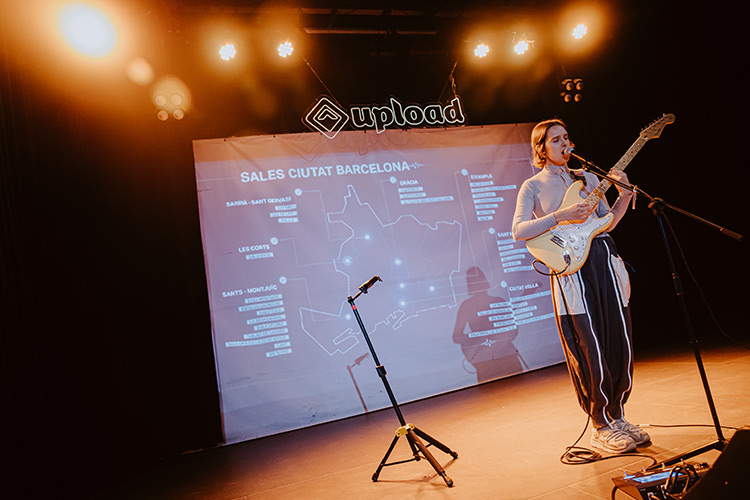
To celebrate, the entity held a special event at the Sala Upload in Barcelona and at the Poble Espanyol in Barcelona, bringing together institutional representatives, cultural professionals and concert hall managers to celebrate an association that has contributed decisively to the consolidation of the sector.
Founded on November 8, 2001 by emblematic venues such as Bikini, Apolo, Salamandra, Razzmatazz, El Clap, La Mirona, among others, ASACC was born with the aim of providing the sector with its own and organized voice. Its creation was a historical milestone by becoming the first association of concert halls in the State, opening a path that other territories would later follow.
During these 25 years, ASACC has led some of the most significant advances for the live music sector. These include the achievement of the first lines of public aid for artistic programming and venue infrastructure, the defense of legislative changes that allowed minors access to concerts and facilitated the programming of live music in music bars. Later he also collaborated in the creation of a new classification of activity as Living Culture spaces in the city of Barcelona that allows live music to be made in any type of space. In addition to the participation, together with other associations in the sector, in the demand that contributed to the reduction of cultural VAT resulting from a few years of tax increases that put the viability of numerous spaces at risk.
The entity has also promoted pioneering projects such as Curtcircuit, recognized with the Ciutat de Barcelona award in 2014, in addition to initiatives such as Sala Barcelona, later awarded for its contribution to cultural reactivation during the pandemic with an ARC Award.
Throughout its history, ASACC has also worked in fundamental areas for the professionalization and sustainability of the sector, participating in the implementation of sexual violence prevention protocols such as No Callem and No en Passem Ni Una, promoting proximity culture programs and collaborating closely with administrations and cultural institutions.
Beyond the commemoration, ASACC wanted to take advantage of this date to highlight the challenges that will mark the coming years. The entity demands that concert halls be fully recognized as cultural facilities and that this recognition be translated into public policies, regulatory frameworks and financing systems consistent with the cultural value they generate.
Among the association’s main priorities is also the protection of cultural spaces from urban pressure, the incorporation of the principle of the agent of change (Agent of Change) in city planning and the creation of conditions that facilitate the opening of new venues, thus guaranteeing the continuity and diversity of the live music network.
Likewise, ASACC warns of the economic fragility that many concert halls are experiencing with excessive dependence on the billing of the bars to make their project viable, so that the halls end up depending on the consumption of drinks to be able to create culture. ASACC demands from the Generalitat of Catalonia a new model of financing, recognition and management of the venues in Catalonia that understands their uniqueness and gives them an adequate framework to develop their activity.
In this new stage, the association is also committed to strengthening its role as a driver of projects, knowledge and international cooperation, promoting professional exchange programs, training initiatives, educational projects and new alliances with state and European networks.
“The halls are not only spaces where music is programmed. They are places where artists are born, communities are built and a fundamental part of contemporary culture is promoted,” defends ASACC. After twenty-five years of collective work, the association faces the future with the desire to continue strengthening the existing rooms and create the necessary conditions for new initiatives to be born that keep a diverse, independent and transformative culture alive.