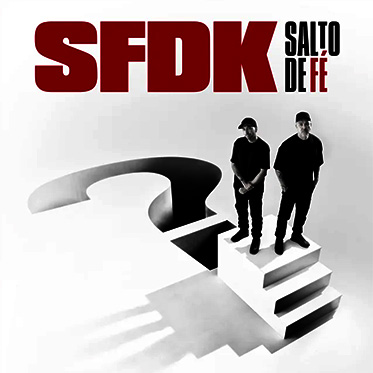
Review of ‘Salto de fé’, the new album by SFDK
Three years after his album, “Unbreakable” (23), the veteran Sevillian duo publishes “Leap of faith” and continues to expand his discography by updating his personal logbook with a Zatu, on the one hand, faithful to his most reflective inclinations where he reveals the anguish over the passage of time, the concern for the chaotic state of the world or the inheritance we leave to those who come; and on the other, making evident his love for dirtier and more foul-mouthed themes with his characteristic dose of acidity.
With thirty-two years of career behind him, it must be said: experience is a degree and no matter how much time passes, there is something in hip hop that is like riding a bicycle, that is, once you learn and practice it, it is difficult to forget it completely. The bike chain may be more or less oiled, there may be better, bad or average albums, but it is undeniable that the bicycle SFDK It works despite the mileage it has on it, or precisely because of that. The album starts with the impetuous “January 2”, with a fast-paced, classical percussion rhythm, where Pino Montano’s gallops between ego and pride for what he is, but above all for what he is not. “I am not what I accept / I am what I rejected”. The group’s eleventh album – pay attention to that fact, eleven – shows a plethora of Acción Sánchez, some of their most rounded rhythms of recent years are here, like the wonderful and groovy “Summer Snow”, with a stellar singing by Andreas Lutz (O’funk’illo), and in which Zatu appears awkwardly in love.
Another of the star rhythms is “The Escape”, warmer and with the prominence of wind instruments and the guitar of Carlos Erbez, credited several times during the album and who provides an organicity that enlarges the ensemble. The instrumental preciousness combined with Zatu’s witty, dirty and direct tone has been one of the strengths of SFDK: “I wear another man’s name on my underwear / that’s why I don’t allow myself to call you faggots,” rap. “Leap of Faith” reaches peaks of emotionality in cuts like “Where they can see it,” with beautiful choruses from Anita Franklin and Kike Baeza on a more ambient base and with asymmetrical percussive patterns, which acts as an ode to kindness and to keep walking; also in “Angry grown man in Hawaii,” with the trumpets of Mr. Monkey Face and the ukulele of the once again very inspired Erbez, where he sends a message to topics such as political waste or bullying: “Leaving your daughter in school classes and having a dog three years older pick her up and corner her / Are those yards or corrals?; and in “Play it”, the first and heartfelt official collaboration with his daughter Ana Rey, in a postcard of mutual gratitude.
“Lollipop” It is the funniest song on the album and tells of Zatu’s misadventures when trying to pass a police drug control without success. Melodic drill with Vera GRV in “Golden Cage” adds color, while the energetic “Ay, Ay, Ay!” with Legendary and Swan Fyahbwoy “More Nah” They provide heat, especially the latter, flaming smoke in a classic and corrosive boom-bap. Tremenda, one of the most outstanding on the album, the same does not happen with “Common places”with La Pantera very little sparkling and decaffeinated for a collaboration of that caliber. The machinery SFDK He continues to leave more than worthy albums.