“Now everyone wants to be from the neighborhood and if they are a little crazy, the better”
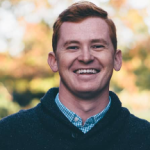
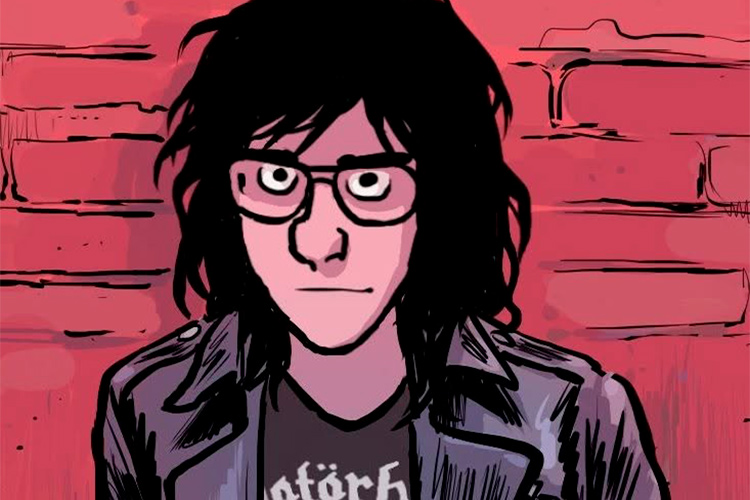
Norma Editorial has just published the complete edition of “Neighborhood blood”the graphic novel that best explains and portrays what life was like in the Barcelona suburbs in the early 1980s. Drugs, juvenile delinquency, unemployment and music, music always as a backdrop, secondary protagonist, of the adventures of Vicen and his people. We interview Jaime Martinauthor of one of the greatest phenomena that the world of comics has experienced in our country.
There was a time when Jaime Martín did not want to hear about “Neighborhood blood”. After the enormous success of that trilogy originally published between the late eighties and early nineties (more than 18,000 copies sold and the Best New Author Award at the 1990 Comics Fair), the cartoonist felt that any conversation ended up returning to the city of L’Hospitalet de Llobregat and the adventures and misadventures (especially misadventures) of Vicen and company. “There was only talk about ‘Neighborhood blood’of ‘Neighborhood blood’ and the author of ‘Neighborhood blood’. It was already a bit tiring.” Like Nirvana having to play “Smells Like Teen Spirit” every night of the concert. Fed up, Martín went so far as to kill the protagonist of the story to definitively close that stage. “I said: now I’ll kill Vicen and to hell with ‘Neighborhood blood’“. But the past always returns, although, fortunately, most of the time with a different perspective. “I owe a lot to ‘Neighborhood blood’. Thanks to those readers I was able to continue learning for years, experiment, make mistakes and continue making one album after another.”
Vicen died, but he has just been resurrected in the comprehensive reissue that Norma Editorial has just published, recovering the three volumes that originally appeared in the magazine El Víbora, accompanying them with a magnificent epilogue that contextualizes the work. Few graphic novels published in our country have aged as well as this portrait of the working-class L’Hospitalet of the 1980s. A city, like all the cities and suburban neighborhoods of Spain at the time, plagued by heroin, juvenile delinquency, violence and lack of opportunities, and a soundtrack in which records by Leño, Barricada, Burning, Ramoncín and La Polla Records resonate. But also for friendship and the feeling of belonging. A social fresco that, read today, seems uncomfortably contemporary. The curious thing is that he was not born with that intention. “I simply started writing about something that was relatively easy for me because it was so close,” he explains.
“I just had to get together with my colleagues and have them refresh my memory of all the things I had heard them tell about their institutes. There was a little bit of everything. Also my experiences.”
The assignment was completely open. His publisher only asked him to make an album. Jaime Martín just had to go out into the street to find inspiration. “Before starting to write fiction about crime dramas or stories about manguis in the Raval, what better way to do it than here, in L’Hospitalet.” From there an almost journalistic working method began. He met with friends from the neighborhood, asked them to refresh his memory and began to accumulate anecdotes: drugs, prostitution, sexist violence, petty thefts, broken families… everything came from close experiences. “I just had to get together with my colleagues and have them refresh my memory of all the things I had heard them tell about their high schools. There was a little bit of everything. Also my experiences, like when we went to buy chocolate at a certain bar. The guy who was passing it around hid it in his little son, who was holding it by the hand. I think that comes out at some point in ‘Neighborhood blood’“That is to say, Jaime Martín’s graphic novel never intended to become a social manifesto, but rather the sum of small everyday details ended up composing the portrait of an era. Surely that is its great value. “In the end I would almost tell you that ‘Neighborhood blood’ It is, above all, a fresco of how I saw the city from my sixteen-year-old perspective.” Filter worked through an extraordinary documentary task. At a time when there were no Google Maps or mobile phones with which to take photos, Martín toured L’Hospitalet and Barcelona with his Zenith camera, portraying streets, buildings and squares so that, later, transferred to the drawing, everything would be recognizable. “I wanted the neighborhood to be real. If not, what was left? I think that truthfulness ends up being transmitted even to those who have never been here.”
“I wouldn’t touch any of the expressions that appear, even though today they may sound sexist, homophobic or violent, because that’s how people spoke then. They are part of the context of the characters”
The link with L’Hospitalet runs through the entire work. Martín, who still lives in the Santa Eulàlia neighborhood, speaks of the city with a pride built precisely from the stigma. “For a long time, being from L’Hospitalet was almost like being plagued.” But that bad reputation ended up becoming a kind of collective identity. “We turned it around. It was like saying: ‘Okay, don’t bother me, I’m from L’Hospitalet.'” A class belonging that, as we commented with a laugh, today has almost become a fashion. “Now everyone wants to be from the neighborhood and, if they are a little manguis, the better, more authentic.” It is inevitable to ask to what extent that reality really belongs to the past. “It makes me a little creepy,” he admits. Although the city has changed profoundly, many situations are repeated. “I still see youth violence, robberies, drugs… Not the same as in the eighties, but there are many things that are there again.” Nor has the reissue been the excuse to rewrite the past, since both the line and the language remain intact. “I wouldn’t touch any of the expressions that appear, even though today they may sound sexist, homophobic or violent, because that’s how they spoke then. They are part of the context of the characters.” To change it would be, in a way, to falsify the testimony. Because that is, precisely, ““Neighborhood blood”: a testimony. The sincere portrait of a generation: that of the junkies who robbed you at knifepoint when you were going to school, that of the junkies who walked with the needle stuck in their arm; and a city that for a long time barely appeared in popular culture beyond clichés. A work born almost without pretensions that ended up becoming one of the great references of our contemporary comics. No, Vicen is not dead.