“The main difference is that this album is more conceptual”
Darling They published before the summer “What will I be?” (Universal, 26), a second album that is more conceptual and earthly than their debut, built around a thread of questions that appeared naturally during the composition.
We chat with the band about the production process, collaborations, their evolution and the vision they have of the industry.
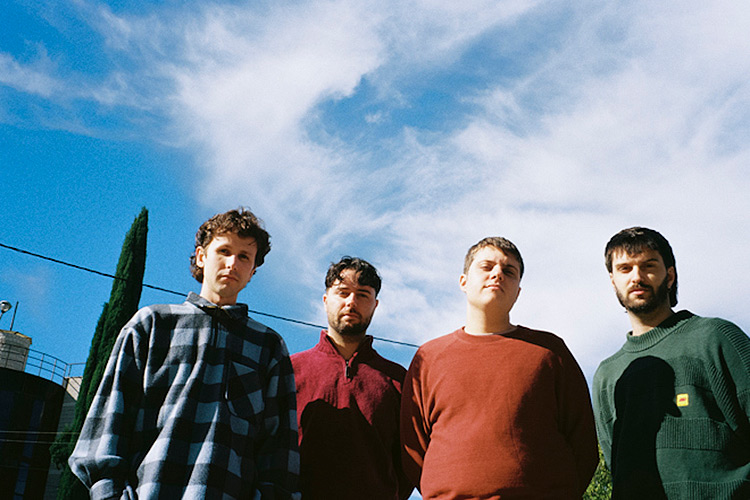
Talking to Querido is talking to four kids from Vigo who don’t stop creating for even a minute. So much so that, barely having published their debut two years ago, they were already shaping what would end up being their second full-length work. “We were quite eager for it to come out now, because it is an album that has been finished for quite some time. We started writing it in 2023, and if the first one came out in May 24, the first demos for it were already made in June and July.” A process that was lengthening. “Between demos, studio, production with Sergio and last-minute collaborations, everything is extended. Then you have to divide it into singles and prepare the launch. The process takes a long time.”
Even so, they celebrate that the album is finally out. “We are quite happy and proud of the result.” They are clear about what difference “What will I be?” of his debut, “A New Hope IV” (24). “The main difference is that this album is more conceptual. All the songs have a meaning, the order too… On the first one you could tell that they were the first songs we made together.” That’s why they took more care of the details. “That was making songs and putting them on an album. In this one everything is more measured. The texts are related and the lyrics are more earthly, without so much philosophy or mental straws. It is a more human album, more from home.”
Musically speaking, “What will I be?” and “A New Hope IV” They maintain a certain continuity. “They follow a similar line, but with different concepts. From production we approach it like the texts. More earthly. There are fewer instruments and fewer outlandish things, although some still exist, such as the audios.” An idea that has a clear origin. “It actually came from Mikel Izal, who on his last tour asked family members to send audios about him. The Veintiuno album also begins with an audio that introduces the story. Seeing that, we thought it would be cool to do something like that, but with real audios.” And that’s how it came about. “We started looking for audios from the people around us. We sent more than a hundred, and the idea with Sergio was to put in the scissors and make the tracks that are now on the album.”
The theme of the questions appeared alone. “We were making demos and we saw that all the choruses had a question, and that the last song we made was ‘What’s going to happen?’. There we saw that it was an album of questions all the time.” Questions that do not have a specific topic. “They are doubts from different vital moments. Being bad with your family, with your partner, not seeing the future of the project clearly… Problems that have happened to all of us.”
“We saw that it was a record of questions all the time. They are doubts from different life moments. Being bad with your family, with your partner, not seeing clearly the future of the project… Problems that have happened to all of us”
They also experienced their own uncertainties. “When we were making the first models we doubted whether we were up to par. There were a couple of months of distrust.” And a certain compositional block. “Things happen with this album that you don’t experience with the first one. You sign with a record company, there are times and ways… But it’s good to live it because all the experiences help for the next ones.” Hence the learning. “There are going to be moments of blockage, but we have learned that it is normal and that it is okay to not write every day. That was the biggest learning from the album.” Another key point is collaborations. “We were clear that there had to be one, that of Merino. The rest was not planned, but after signing with Universal the possibility of working with David de FASHION“. From there, the rest arrived. “We talked about Ivan Ferreiro I had to sing ‘What’s going to happen?’ so it means starting the album with an audio of yours and ending it with that song. And we had also thought about Diego, because he was the first person we met from the industry.”
Now comes the time to take everything live. “We have been stopped for a while and we already feel that desire.” A return that will bring changes. “There are new positions, people who play things that they didn’t play before, and we have adapted songs from the first album so that the guitars are more noticeable. We want it to be more professional. Have a lighting set, so that everything is more measured. On the first tour we wanted to do too much, like bring a lot of synthesizers. Now we are taking them on, also because the new songs help. We are going to be more comfortable.”
What does not change is how to approach your career. “There are those who say that with the second album things will start to rise, but we tell them to look at their favorite band and how long it took them to get there. You have to be clear about what industry you are in, where you want to be and what your motivations are.” Numbers matter, but with a head. “You have to evaluate them coldly, because if not they screw with your head. They matter because a project has to feed you, but everything has its times.” Speaking of an album full of doubts, they could only say goodbye with one. “The question would be ‘What’s going to happen?’, that human curiosity of wanting to know what’s coming when you don’t really need to know. It’s the question that encompasses everything, the one that everyone asks themselves at some point.”