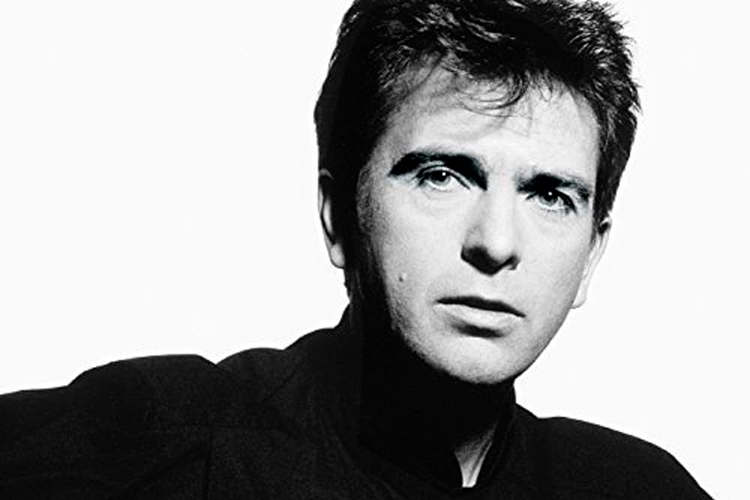
Special “So”: Art and business by Peter Gabriel
“SW” It is clearly the most important album of the career of Peter Gabrielthe work that divides his discography in two and that ends up turning him into a popular star.
Gabriel had evidently already earned critical acclaim and a loyal fan base, first as a singer of Genesis and then with his first four solo albums, which had made him the champion of the most experimental and arty pop in the United Kingdom. But his other story was about to begin.
In those days, Gabriel’s old band, Genesishad seen its popularity skyrocket in the early 1980s, fueled primarily by Phil Collins, its replacement vocalist,’s natural instinct for commercial pop. The same month that Gabriel got into the studio to start recording “SW”February 1985, saw the appearance of the successful “No Jacket Required” by Collins, an album that was going to be number one in half the world.
It seems clear that it was not a coincidence, Gabriel was clear from the beginning that he could also reach the mass public, without having to sacrifice his artistic sensitivity. It seems very significant to me that the first producer considered for the project was Nile Rodgers, the former member of Chic, with a perfect eye for funk and disco hits who had managed to bring David Bowie from the experimental Berlin trilogy to the mainstream a little earlier with “Let’s Dance”. In the end he opted for Daniel Lanois who had previously worked with, among others, Brian Eno and had made his great leap to fame producing the “The Unforgettable Fire” of U2 together with Eno, with whom he had already worked on the film’s soundtrack “Bird”, released the previous year.
Otis Redding’s footprint
But this time he was going to join his art rock, his experiments and his interest in world music with a youthful passion, his love for soul music and, specifically, Otis Redding, which he had carried since he saw the legendary singer live in London at the Ram Jam in London at the beginning of 1967, an experience that he would remember years later as if they had “opened his heart.” From that love, the song “Sledgehammer” would be born, which, with its well-known video, was going to make him a global star.
In “SW”the sound of the previous albums, which was characterized by a cold and minimalist sound with certain ethnic elements, was now going to be complemented with a good dose of R&B and soul influences, in addition to several ballads that more closely follow the conventions of pop music, creating a much richer and more accessible soundscape for the general public.
But beyond that, “SW” It is very far from being a purely commercial album or the moment in which Gabriel sold out. Take as an example the powerful opening song, “Red Rain”, a full-fledged vocal demonstration by Gabriel that began with the ‘hi hat’ of Stewart Copeland from The Police, brought in specifically to play that part, demonstrating the incredible effort put into every detail of the album. There is something really cathartic about this apocalyptic song that revolves around many of the sociopolitical concerns of the mid-eighties, still in the midst of the Cold War, such as radioactive fallout or systemic diseases.
A very catchy hammer
Despite a more dynamic and careful production, this song could have appeared on one of his first solo albums, something that, of course, did not happen when listening to the next song, “Sledgehammer”, a soul banger that was the catchiest and most joyful moment of the former Genesis’ career.
But up to this point there were its particularities, the beginning was a sample of a shakuhachi, and in 1986 samples and non-Western instruments were still avant-garde. Of course, beyond its particularities, “Sledgehammer” was absolutely irresistible, from its bass and guitar riff, to those winds in which Wayne Jackson himself participates on trumpet, the same one who accompanied Otis in many of his classics.
To round off the operation, Gabriel accompanied the song with an original video with animated movements created by Peter Lord and his team at Aardman Animations, among whom was a young Nick Park, who would end up creating “Wallace and Grommit” either “Escape on the farm.”
Unseating Genesis
As it could not be otherwise, it was the song chosen to introduce the album, being published a month before its publication, in April 1986. In a case of poetic justice, the song would become the first, and last single, of Peter Gabriel which rose to the top of the charts in the United States. It was on July 26, 1986 and he was doing it to replace the first number one on those same charts of his former band, Genesis. Phil Collins would joke years later that they didn’t find out at the time but that, if they had, they would have sent him a message with the following words: “Congratulations, motherfucker.”
“SW” He continued with another of his most popular songs, the duet with Kate Bush on “Don’t Give Up.” Would there be a more perfect couple to sing together than these two wonderful weirdos? Possibly not. The fact is that the song manages to rise above its sentimentality thanks to some dedicated singers, Tony Levin’s bass and lyrics that more than the Great Depression seemed to point to the Thatcher years in the United Kingdom. It was another of the album’s hits and reached the Top Ten in the United Kingdom.
With “That Voice Again” the energy of the album increases again thanks in particular to the performance of Manu Katché on drums. It is a song with a kind of synthesized ‘jangle’ sound in its chorus and a Caribbean touch in the verses.
A mythical scene
Although Gabriel always thought of it as the end of the album, “In Your Eyes” appeared as the first song on the second side. It is the best song on the album along with “Sledgehammer”, with another great vocal performance by Gabriel who manages to convey a raw desperation in his voice in the verses that later transforms into a defiant energy full of vitality in the chorus. The song is completed with the tribal performance of Katché on the drums and the explosive appearance of Youssou N’Dour at the end of it. Three years later John Cusack and his radio cassette would make it legendary thanks to “A great love” by Cameron Crowe.
“Mercy Street” is the hidden gem of the album, the song that shows that “SW” It went far beyond its singles. An atmospheric and ethereal song with which Gabriel once again demonstrated his mastery when it came to incorporating non-Western influences into his music, in this case his imperceptible Rio rhythms. But after this delicacy Gabriel turned up the volume again and showed that the former Genesis singer could also be funk with the fantastic “Big Time”, which, as it could not be otherwise, gave Gabriel his second Top Ten on the Billboard charts.
The song that closed the original vinyl was “We Do What We’re Told (Milgram’s 37)”, the first song that was recorded for the project, having its origins in what would be Gabriel’s best album if not for this “SW”, their third album, known as “Melt“, released in 1980. It is, without a doubt, the most experimental song on the album and the one that best unites it with those early, more avant-garde works. Although it did not appear on the first vinyl versions of the album, in other formats it did include “This Is The Picture (Excellent Birds)”, his collaboration with Laurie Anderson, with another great bass by Levin.
Business and art
The album perfectly fulfilled its objective and turned Gabriel into a superstar, although without losing the fervor of critics, selling more than five million copies in the United States alone, a country in which Gabriel had barely had success before “SW”. Thanks to the money he made with this album, Gabriel achieved something he had always sought, total artistic independence. He was able to build the studio of his dreams, the Real World Studios, and it also helped him reactivate another of his dreams, the WOMAD festival, dedicated to world music. It also gave him the opportunity to create his own label, Real World.
Of course, financial stability may also have brought a decline in Gabriel’s musical production. We had to wait three years to hear new music, and it was not an album but the acclaimed soundtrack of “The last temptation of Christ” by Martin Scorsese. The continuation of “SW” It wouldn’t arrive until 1992 when it finally appeared “Us.” Since then the British production rate continued to decline.
Despite everything, Gabriel has not failed to demonstrate that he is more interested in art than business, although in 1986 he managed to combine them in a wonderful way on the album that would define his career forever.