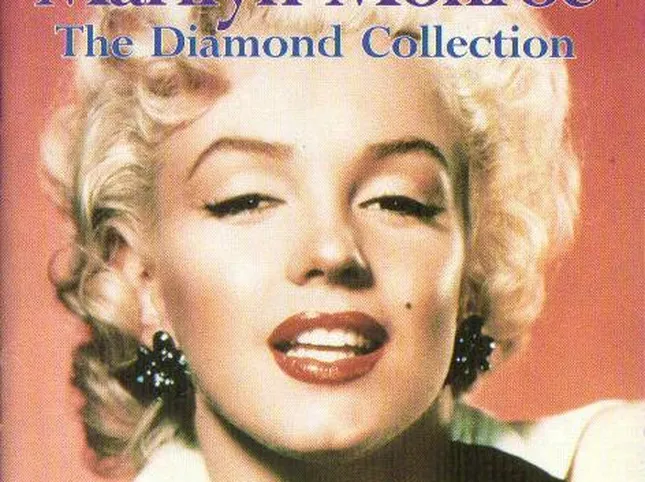
100 years of Marilyn Monroe: the most beautiful musical tributes
Marilyn Monroe she was not only an icon of cinema, but also a muse for generations of musicians. The contrast between his dazzling public image and the profound fragility of his private life inspired extraordinary songs, capable of oscillating between pure pop celebration and the most melancholic poetry.
Here are the most beautiful and significant musical tributes dedicated to Norma Jeane Mortenson, 100 years after her birth.
“Candle in the Wind” – Elton John (1973)
Probably the ultimate homage. Written together with Bernie Taupin, the song opens with the famous phrase “Goodbye Norma Jean“. The text avoids the superficial glamor of Hollywood to focus on the vulnerability of the actress, described as a fragile candle that burned under the whipping wind of success and media exploitation. But it would be reductive to think only of a song “about Marylin Monroe”, as Bernie himself explained: «I think the biggest misconception about “Candle In The Wind” is that I was a Marilyn Monroe fanatic, which couldn’t be further from the truth. It’s not that I didn’t have respect for her. It’s just that the song could easily have been about James Dean, Jim Morrison, or Sylvia Plath, or Virginia Woolf. I mean, basically, anyone, any writer, actor, actress or musician who died young and became this sort of iconic Dorian Gray image, that thing where they just stopped aging. In a way, I’m fascinated by that concept. So really the song is about how fame affects the man or woman on the street, that whole adulation thing and fan fanaticism. It’s quite strange how people actually believe that these people are somehow different from us. It’s a theme that features prominently in many of our songs and I think it will probably continue to do so.”
“Celluloid Heroes” – The Kinks (1972)
Splendid and nostalgic song that celebrates the stars imprinted on the Walk of Fame in Los Angeles. Among the various cinema myths cited by Ray Davies there is Marilyn herself, remembered with verses full of empathy that underline how the film industry has somehow consumed her and pushed her towards a tragic destiny. “But please, don’t tread on dearest Marilyn / ‘Cause she’s not very tough / She should have been made of iron or steel / But she was only made of flesh and blood”.
“Vogue” (1990) & “Material Girl” (1984) – Madonna
Madonna has built much of her visual imagery by reworking the myth of Marilyn. If in Vogue places her in the famous list of immortal divas (“Marilyn, Jimmy Dean, facing a cover of a magazine“), in the video of Material Girl stages a faithful and iconic reconstruction of Marilyn’s famous performance in the film Men prefer blondes.
“Who Killed Marilyn?” – Misfits (1981)
The song is a direct attack on the official version of Monroe’s death and fully embraces the conspiracy theories born after August 5, 1962. The lyrics, written by frontman Glenn Danzig, rejects the idea of suicide by overdose and describes the actress’s death as a murder orchestrated from above. The refrain, in fact, reiterates that the crime scene was manipulated to make the actress’s death seem like a voluntary act (“Make it seem a suicide”).
“Marilyn Monroe” – Nicki Minaj (2012)
A very introspective song that moves away from Minaj’s typical sharp rap. In the text, the artist explores his own insecurities and the pressure of fame, comparing his fragilities and mistakes to those of the Hollywood diva. The song incorporates in the chorus a clear reference to the most famous (although historically debated) quote associated with the actress: “If you can’t handle my worst, you ain’t getting my best”.
“Norma” – Pierangelo Bertoli (1979)
It is perhaps the most intense and poetic Italian tribute. Bertoli deliberately chooses not to use the actress’s stage name, addressing her as “Norma”. The song tells of the claustrophobic solitude that enveloped her with the spotlights off, giving her back a human dignity far from the stereotypes of the “airhead blonde”.
“Marilyn” – Riccardo Cocciante (1982)
Included in the album Courageousthis piece is a passionate and emotional portrait that plays on the chiaroscuro of the actress’s life. The singer-songwriter’s scratchy voice underlines the tragedy of his passing and the crystallization of his myth over time.
“I want to discover America” – Fred Buscaglione / Natalino Otto (1957)
A decidedly lighter and more ironic approach, born at the end of the 1950s. The text perfectly photographs the collective obsession of the time for overseas well-being and for the exuberant charm of Marilyn, who became the symbol of the American dream in the common imagination.
“Marilyn” – Theatrical Musical Assembly (1977)
“Marilyn” is the opening track and the manifesto piece of the second album of the same name by the Assembly Musicale Teatrale (AMT), published in 1977. Written by Gian Piero Alloisio and Bruno Biggi, the piece uses the tragic and iconic figure of Marilyn not to propose a simple biography, but as a magnifying glass to make a fierce criticism of consumerism, the commodification of the body and the “society of the spectacle” typical of the Seventies.