Pearls Before Swine: a cult band between folk and psychedelia
Pearls Before Swine were born in 1965 in Eau Gallie, Florida, when Tom Rapp, then a young singer-songwriter in his early twenties, decided to transform his anxieties and existential visions into music. The name of the group is taken from the Gospel according to Matthew (“Do not give holy things to dogs, and do not throw your pearls before swine”).
Pearls Before Swine are not a conventional band: rather a fluid collective gathered around the central figure of Rapp, alternating between school friends and studio musicians, mixing acoustic folk, psychedelia, and experimental arrangements.
The first album, “One Nation Underground” (1967, ESP-Disk), surprises for its originality. Recorded in just four days in New York, the album blends traditional folk, smoky psychedelia and lyrics full of irony and social tension. The artwork chosen by Rapp – details of Hieronymus Bosch’s “The Garden of Earthly Delights” – reflects the enigmatic and visionary atmosphere of the album.
Songs like “Uncle John”, with its implicit criticism of the Vietnam War, or “(Oh Dear) Miss Morse”, an ironic game with Morse code, show an artist uninterested in the fashions of the moment and more focused on an introspective and provocative message.
Despite modest sales, the record quickly gained cult status in the 1960s underground community, placing Rapp among the most original songwriters of his generation
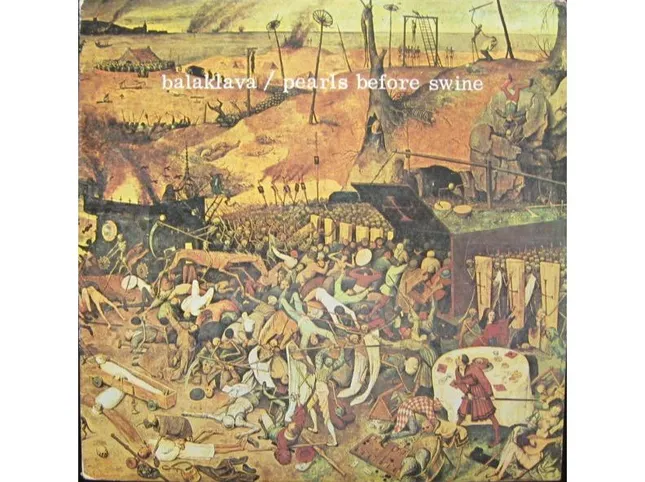
The sequel, “Balaklava“ (1968), confirms itself as one of the group’s most ambitious works: an anti-heroic concept album about war, inspired by the famous charge of the British Light Brigade (Crimean War, 1854). Rapp incorporates ambient sound effects, archival vocals from historic recordings and unusual instruments, further broadening the band’s sonic language.
In 1969 the partnership with ESP-Disk ended and Pearls Before Swine moved to the Reprise Records label. By now Rapp is the only stable member: the other musicians come and go, and the subsequent albums – “These Things Too” (1969), “The Use of Ashes” (1970), “City of Gold” (1971) and “Beautiful Lies You Could Live In” (1971) – mark a softer and more reflective turn.
These works, often recorded between Nashville and New York with high-level sessionmen and with the vocal contribution of Rapp’s wife, Elisabeth Joosten, explore humanistic, symbolic and sometimes esoteric themes, while always maintaining a folk-poetic, melancholic and intimate touch.
After the final dissolution of the Pearls (1974) and a brief solo career, Rapp retired from the musical world and became a civil rights lawyer, graduating from the University of Pennsylvania Law School in 1984.In the 1990s and 2000s he sporadically returned to play psychedelic festivals and reissued part of his catalogue, consolidating his reputation as a cult figure among psychedelic folk enthusiasts. He dies in 2018.
1967 – One Nation Underground
→ “Ballad to an Amber Lady”
1968 – Balaklava
→ “Translucent Carriages”
1969 – These Things Too
Sail away
1970 – The Use of Ashes
→ “The Jeweler”
1971 – City of Gold
→ “City of Gold”
1971 – Beautiful Lies You Could Live In
→ “Come to Me Softly”
1973 – Sunforest
→ “Sunforest”
This article was created with the help of artificial intelligence.