Who is Lizzo today? Between crisis, return and a new album
“Reclaiming the word ‘bitch’ is empowering: it means taking a label once used to belittle women and transforming it into a declaration of self-confidence and unapologetic self-love”: with this statement entrusted to a press release, Lizzo announced the release of his new studio album. The news came from the pop star herself on her 38th birthday, last April 27th.
The title of the album, arriving next June 5thit is precisely “Bitches” and is further explored by the title track, which will be released tomorrow – May 1st – as a single. The pop star’s next recording project will be first studio work since “Special” of 2022 (here is our review), after which the career of Melissa Viviane Jeffersonthis is the artist’s registered name, has suffered several shocks following the harassment allegations by some of her former employees, including dancers and stylists, followed by moments in which the singer it seemed he wanted to abandon music. After making it known in August 2024 that she wanted to take “a sabbatical to protect my serenity”, Lizzo returned with a new single, “Love in real life”, at the beginning of 2025. The song, which at the time marked the artist’s first release since her participation in the “Barbie” soundtrack (here is our review) in 2023, followed by the song “Still bad“. The single that really brought Lizzo back into action arrived last March, entitled “Don’t make me love u”, first real preview of what has now been announced as her new album, “Bitch.”
Who is Lizzo really for the public today?
Brittany Spanos nailed the point in an article for the “Guardian”asking bluntly “Who is Lizzo really for the public today?A question that comes after years in which the singer’s image seemed crystallizedpowerful and recognizable, like also demonstrated on stage in Milan in 2023 (here is our story of the concert), built on an idea of radical empowerment, on an exposed and claimed body, on a stage presence that transformed each performance into a political as well as musical act, and which today instead appears to be crossed by deep cracks.
The breaking point came in 2023when some former dancers brought an action a lawsuit against the pop star accusing her of sexual harassment, body shaming and creating a hostile work environment, accusations that overlapped in an almost violent way with Lizzo’s public image as a symbol of body positivity and inclusive feminismgenerating a fracture that is difficult to mend between narrative and perceived reality. While the artist continued to deny all accusations, calling them unfounded and speaking openly of an attack on his person and career, however, the media trial had an impact on public perceptionamplified by further testimonies and ongoing legal proceedings.
To this was added another equally delicate element, that linked to transformation of his bodytold by Lizzo herself in a transparent, almost daily way, as a journey started for mental rather than physical well-being, but which inevitably ended up fueling a constant and often polarized debate. Between those who celebrated the change and those who experienced it as a contradiction to the original message, the artist found herself at the center of a narrative that called into question not only her image, but also her cultural role, to the point of bringing out a question that still remains suspended: what does Lizzo represent today, and for whom?
Towards the new album
In an attempt to redefine this identity, Lizzo continued to move on multiple frontstrying to regain space also through music, without however being able to replicate the immediate impact of his past successes. The singles released in 2025, initially conceived as previews of a new project, fit perfectly into the formula that had made her a dominant presence on the charts, built on that mix of retro funk, pop energy and immediacy that had transformed songs like “Truth Hurts” and “Good as Hell” into global phenomena, but they failed to truly enter the mainstream conversation, marking a clear distance between intention and reception.
Also the mixtape “My face hurts from smiling”released by surprise, seemed to indicate a different direction, freer and less polished, almost a return to the hip hop roots of the beginning, with a sound less built for the radio and more oriented towards experimentation, enriched by the presence of important collaborations such as those with Doja Cat and SZA, but even this project failed to generate widespread attentionremaining confined to limited reception.
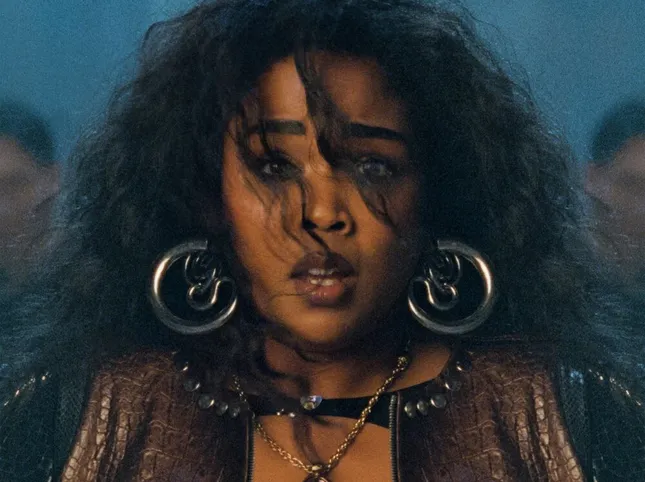
The real attempt to reactivate the story came with “Don’t make me love u”, a song that consciously takes up the sound aesthetics that had marked her rise, mixing suggestions attributable to Tina Turner and Michael Jackson, but above all accompanied by a highly symbolic video clip, in which Lizzo compares herself with a past version of herself, closer to the image of the “Cuz I love you” era, in a gesture that becomes both an embrace and a question at the same time.
Yet, even in this case, public response appeared lukewarmalmost distracted, a sign of a relationship that has become more complex and less immediate, where the debate on the body and its evolution seems to have taken over the music itself. In a cultural context in which new aesthetic standards and new media dynamics continually redefine the way in which female artists are perceived, Lizzo thus appears suspended between what she has been and what she is trying to become, while her public appearances and her presence on social media sometimes give back the sensation of a search still in progress, of a balance not entirely found.
“Bitch”
The announcement of “Bitches“, the new album with which Lizzo tries to regain possession of his own story, choosing a title that is already a statement in itself, a gesture of symbolic rewriting that has its roots both in the history of pop and in his own artistic trajectory. The album, out on June 5, will be preceded by the title track, a song that openly dialogues with Meredith Brooks’ 1997 hit of the same name and which at the same time recalls one of the most iconic phrases of Lizzo’s career, included in the 2019 song “Truth hurts”, in which she declared that “I’m 100 percent that bitch” became the manifesto of an entire phase.
Speaking about the inspiration behind the project, the artist explained in a press release: “Reclaiming the word “bitch” is empowering: it means taking a label once used to belittle women and transforming it into a statement of self-confidence and unapologetic self-love.” And again:
“So many incredible women in music have used this word in a positive way, like Meredith Brooks and Missy Elliott. So it was only natural to title my album ‘Bitch,’ because it’s become my favorite word when I use it on my own terms and because I’m 100% that ‘bitch’!”
Here is the tracklist and cover of “Bitch”:
- To Toast
- Happy 2 Be
- Don’t Make Me Love U
- Bitches
- She Stole My Man
- Whose Hair Is This
- Little Black Cat
- That GRRRL
- Too Nice
- Like a Crime
- Goodmorning!