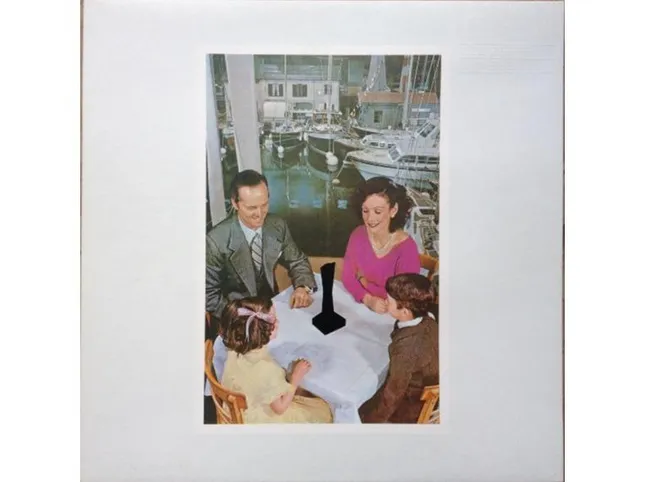
Led Zeppelin’s most enigmatic album
It is not uncommon that in the parable of the most legendary bands some works seem to inhabit a suspended, almost occult dimension, escaping immediate definitions thanks to a hidden charm that condemns them – often unjustly – to a marginal perception. This is the fate of records like “Animals” by Pink Floyd, “Their Satanic Majesties Request” by the Rolling Stones, “The Soft Parade” by the Doors, but also, upon closer inspection, of “Presence” by Led Zeppelin, which today celebrates its fiftieth anniversary. The British quartet consigned him to history at the end of March 1976, at a time when the fame of Jimmy Page and his companions had taken on biblical, almost suffocating proportions. So much so that only a year earlier, with the release of the double and monumental “Physical Graffiti”, Zep had rewritten the hierarchies of the record market with their entire catalog – all six previous albums – simultaneously occupying a positioningAnd of the Billboard 200, while aboard a private Boeing 720 (the Starship), they shattered the Beatles’ attendance records, moving in an aura of omnipotence. A triumph that acted as a double-edged sword: prisoner of their own myth, in fact, the group began to feel crushed by ruthless media exposure and a compromising lifestyle.
The power of the creative will
“Presence” represented the beginning of a new phase for Led Zeppelin, one that would lead the band to break up within a few years, after the tragic death of John Bonham in 1980. The genesis of the album was already an open challenge to fragility: Robert Plant recorded the vocal lines almost entirely while confined in a wheelchair, transforming forced immobility into a test of pure character. Having recovered from a very serious car accident in Rhodes, the singer did not let himself be discouraged by the physical destruction, but offered a dry, intense and deeply felt vocal performance, which proudly clashed with the iconography of the unconquered “golden god”.
While Plant transformed his limitations into expressive strength, Page responded with a dedication to the work that bordered on technical heroism, assuming total control of the control desk and staying awake for overdubbing sessions lasting up to forty-eight hours uninterrupted. A miracle of cohesion that would not have been possible, in any case, without the granite contribution of John Paul Jones and John Bonham. At a time when Page’s leadership was becoming obsessive, Jones acted as tostill methodical, building bass lines of geometric complexity to fill the absence of keyboards, while Bonham guaranteed his usual flawless performance power. The condition of tax exile also strengthened the bond between the four: to escape unlimited British tax pressure, the band transformed into a collective of “luxury nomads” between Morocco and Germany. An inaction which, rather than dispersing them, imposed a creative pressure that pushed them to complete the album at the Musicland Studios in Munich in less than twenty days, so as not to exceed the technical time required for their stay abroad.
The band as “presence” and the enigma of the Object
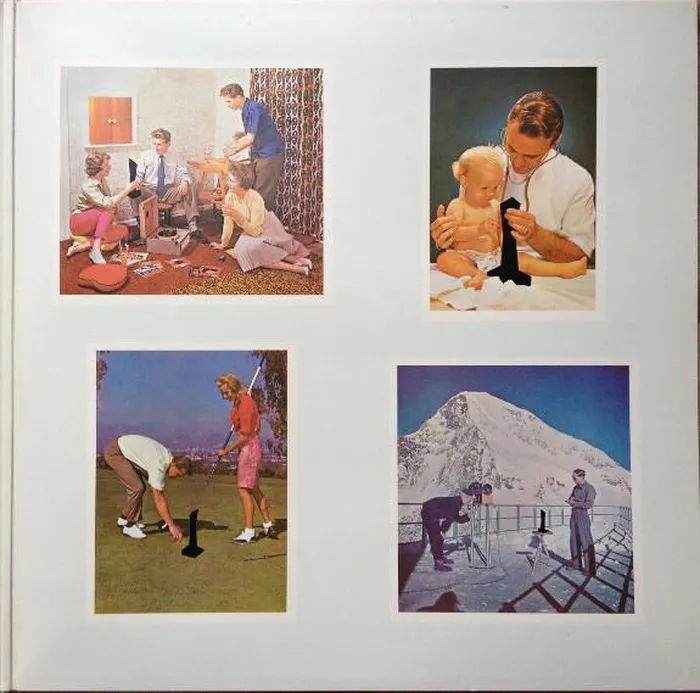
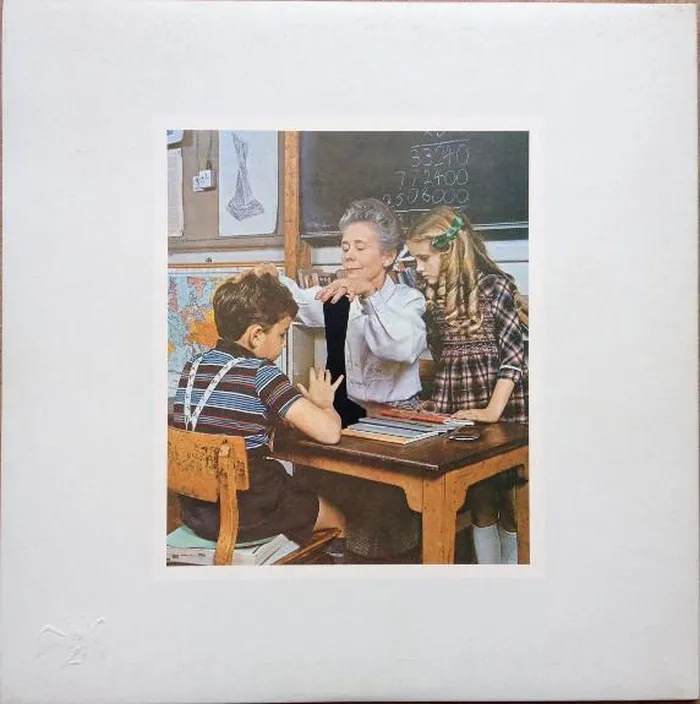
If compared to the majestic stratification of previous works, “Presence” stands out with a radical choice: the total absence not only of keyboards, but also of acoustic guitars. On these tracks Jimmy Page weaves an electric tapestry with nervous nuances, a wall of sound sealed by the iconic cover of the Hipgnosis studio. Here, seemingly reassuring scenes of everyday life from the 1950s are violated by the enigmatic “The Object”, a sort of metaphysical magnet which for Page represented the intrinsic strength of the band. The guitarist himself described it as an element capable of pushing people to reflect on what is real (just like their music did) placing itself as the focal point around which the group’s energy revolved in that difficult period. The opener “Achilles Last Stand”, ten minutes of pure epic, redefines the boundaries of rock: Jones’ bass and Page’s twelve overlapping guitar tracks create a whirlwind of sound that evokes journeys to distant worlds. From a lyrical point of view, Plant transfigures the myth of Achilles to tell of his own fall: the text is a paranoid logbook between Morocco, Greece and New Jersey, a reflection on the loss of one’s “invulnerability”. Bonham’s performance here is superhuman, made up of incessant kicks and millimetric fills, supporting a sound architecture that remains the favorite of many purists. “For Your Life” follows, a syncopated piece where the riff almost seems to limp, reflecting Plant’s physical state; here the singer becomes a ruthless and disgusted observer of the toxic narcissism of a Hollywood that was consuming the band itself from within.
The tension is dissolved in the funk of “Royal Orleans”, inspired by a picaresque meeting of Jones in New Orleans, where the irony hides a dry and brutal production. The torment re-emerges in “Nobody’s Fault But Mine”, hard blues by Blind Willie Johnson reinterpreted in an obsessive key: Page’s phasing and Plant’s stabbing harmonica transform guilt into a secular and inexorable mantra. With “Candy Store Rock”, the band attempts a feverish return to the roots of ’50s rock ‘n’ roll through a distorted and neurotic lens, while “Hots On For Nowhere” oozes frustration and sarcasm towards Peter Grant’s management. The circle closes with “Tea For One”, a slow and heartbreaking blues where Page’s every note is charged with a cold and sidereal reverberation.
The legacy of a monolith
Fifty years later, “Presence” has not lost a iota of its ability to disturb (with its cover) and amaze (with its sounds). Page stated that the album’s title reflected the ancestral energy breathed at Musicland Studios; an intensity that, however, was not enough to protect the group from its fate. If Plant’s convalescence prevented him from immediately taking the album on tour, the subsequent death of his son Karac in 1977 broke every balance, dragging the band adrift – even if the group would find the strength to regroup first in the studio to record the last chapter, “In Through The Out Door”, and then for the historic Knebworth dates in 1979. That said, “Presence” remains the legacy of a band destined to artistic immortality, but who, faced with fragility, chose to react by imposing his presence with the force of a silent hurricane.