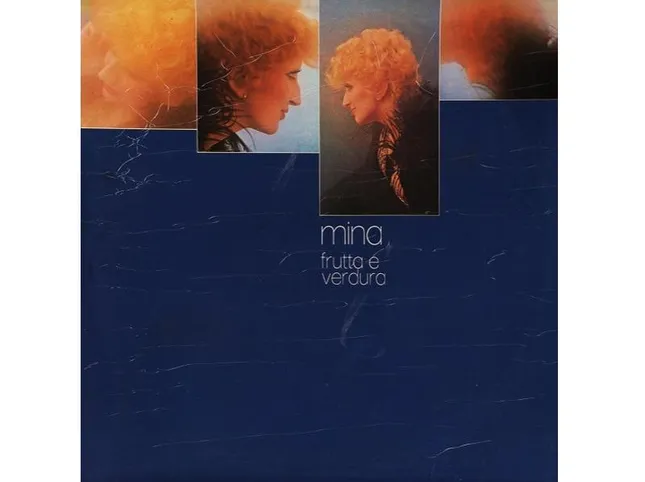
Mina Week: “I have to go back to my house”
In the week of Mina’s birthday, we wish her a happy birthday by publishing five cards, one a day, taken from the book “Mina è” by Renato Tortarolo and Gabriele Sanlazzaro, published by Rizzoli (368 pages, 25 euros).
Album: FRUIT AND VEGETABLES
I have to go back to my house
Unpublished
Duration: 4:42
Author: Luigi Clausetti
The heart beats slower. Yet it should be the opposite. You are doing something that others would not understand or, even if they knew, would advise you against doing: you will be unhappy. Everything is dark around you, like a day when the sun is covered by threatening clouds. That sun is you, or at least you wanted to be. But you’ve met him, and now he’s chasing you. What do you want them to care about your previous life? Selfishness has no boundaries, even when it is disguised as passion. Let’s not talk about love, because that is a hot button. What will you do with your life now? And above all, how will you make him understand that it’s time to put an end to this escape from responsibility?
I have to go back to my house it’s one of those songs in which Mina stages all the bewilderment, disenchantment and disappointment you feel in front of a house that, as soon as it’s built, already collapses before your eyes: the protagonist is afraid, the step is too big. And then there’s her husband. Some might say: he could have thought of it before. And you already feel how it will end. She even tries to explain it to him but, as she tries, she realizes that he won’t understand: it would be a life of regrets with him. And he will never be happy.
Now, it’s not like love stories always have such a tragic outcome. God forbid. But Mina is certainly very skilled at translating the most conflicting emotions, the impression of losing ground and of no longer knowing where to turn.
I have to go back to my house it recalls certain painful turns of flamenco. The classical guitar arpeggio repeats the notes like the days that pass always the same. While Mina’s interpretation is kept at the tone of speech, the volume of the voice does not rise because the protagonist has realized that it is over but one must not know. The arrangement is by Natale Massara who thinks of it in crescendo, like when you become aware of something. Halfway through the song, Mina’s thoughts are joined by the gentle strength of the strings and the drums of Tullio De Piscopo, who underlines all the bitterness of the moment with a few hits of the snare drum.
In the end the protagonist is a good woman, fallen into the trap of passion, into the illusion of great love. She doesn’t have much left, she knows that. And then he clings to the words with all his might. She hopes they will explain to her what she did and how to get out of a crossroads that puts two unknowns in front of her: her husband and her lover. In any case he will never be happy again. He knows it and accepts it.