The legacy of Piero Umiliani, from “Mah-nà mah-nà” to Stranger things
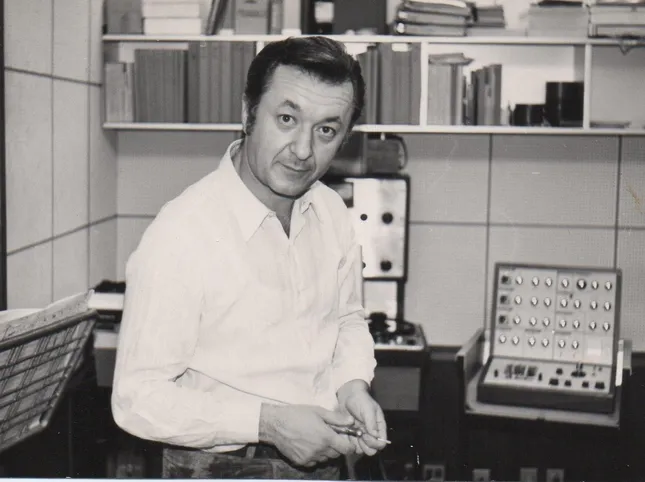
The hat is still on the coat rack, next to the phone booth and the collage of record covers that would drive collectors crazy. The temperature is that of the champagne cellars, to preserve intact the 1974 Minimoog, the vintage Arp 2600 (the voice of the droid C1P8 in “Star Wars”), the ’73 Fender Rhodes, the Wurlitzer, and every original machine that has lived here in Rome since 1968, that is, since the composer Piero Umiliani founded the Sound Workshop recording studio, the incubator of all his ideas. Thousands of ideas. The most varied: from Neapolitan songs in Dixieland style to soundtracks (over one hundred and fifty) for crime, horror, erotic, comedy, thriller and musical films. He was a reckless explorer, capable of moving between jazz, funk, ragtime, bossanova, environmental sounds and tropical suggestions, experimentation with synthetic keyboards, up to library music, providing soundtracks for documentaries, news programs and television specials. It is no coincidence that he is the most sampled Italian musician in the world after Ennio Morricone. On the occasion of its centenary, the “Roma Film Music Festival” (which lasts until March 22nd, directed by Marco Patrignani) dedicates three days to Piero Umiliani: on March 16th a live performance by Gegè Munari & Friends (historic drummer of Umiliani and Morricone), on the 17th the interactive exhibition with guests Joan Thiele and Jolly Mare, on the 18th a dedicated concert by Calibro 35. We talk about everything with his daughter Elisabetta, who together with her sister Alessandra is the guardian of a priceless treasure.
The first thing that strikes me is the legendary VCS3 synthesizer in that corner. What’s the story?
«I saw the film about Franco Battiato “The Long Journey”. You know when the protagonist says that there are three examples of the VCS3 in the world? One was by Pink Floyd, one by Battiato, the third is this. My father drove to London to get it directly from the manufacturer.”
A sound also taken from the theme of “Stranger Things”.
«In fact, Kyle Dixon, the composer of the TV series, contacted us to visit us. We await him with open arms. We renovated the studio to bring it back exactly to how it was and put it at the service of beautiful projects, in continuity with my father’s work, such as those of Calibro 35, Joan Thiele, Jolly Mare. Soon we will publish an unpublished work by dad, there are many things in the archive. My sister and I listen to the masters on her Revox.”
Was this study his first declaration of independence?
«Yes, it was his kingdom, you couldn’t see him at home for days. He was very farsighted in building it and founding his label, Omicron, because in this way he managed to keep the rights to his works. For the same reason many productions no longer called him, because it wasn’t convenient for them. But he made up for it with his library work, which was going swimmingly. The experimentation periods were the most fun. He would go to VCS3 and look for sounds. Then he got excited: “Look here, I’ve found the wind!”.
He was so productive that he had to sign under pseudonyms.
«They said: “Enough with Umiliani, let’s take Zalla’s pieces, let’s take Catamo, or Tusco, Rovi, Moggi”, which were always him. On this wall the projectionist sent the images that my father set to music. Upstairs there was slow motion.”
Let’s go in order. After the short film for the Taviani brothers in 1954, his debut was in 1958 with “I Soliti ignoti”. The first entirely jazz soundtrack in an Italian film.
«As a boy he had been struck by Duke Ellington, he had started playing in the warehouses and in the rooms for the American soldiers, he liked to make variations on the theme. He entered the world he dreamed of. Plus he was a true cinema enthusiast. I remember running from one room to another. When I was 10, he took me to see Kurosawa, so to speak.”
Is it true that Monicelli’s first choice was Armando Trovajoli?
“Yes. Mario Monicelli offered the soundtrack of “I soliti ignoti” to Trovajoli, who, however, thought it would be a flop because Vittorio Gassman was known for dramatic roles, and couldn’t imagine it being comical. He gave up and instead advised my father, who finished the job in two weeks. The film was a success, you could hear the laughter outside the theaters.”
In the sequel “The audacious coup of the usual unknown men” and in “Smog”, Umiliani became artistically linked to Chet Baker. Fantastic musician but difficult character?
«It was easy to work with my father, all the musicians say that he never got angry and left total freedom. In Chet he saw great talent, the rest didn’t matter. I met him too, Chet. I had seen on the discs photos of a beautiful boy, with the face of an angel, but I found myself in front of a gaunt man, although very sweet. She asked my father for money, but he reluctantly denied it. He wanted to help a friend but he knew where the money would go and he didn’t want that responsibility.”
But he defended him in every way when, instead of showing up at the Cinecittà studios, Baker went to Germany to get drugs.
«The production of “The audacious coup of the usual unknown men” wanted to replace him, but dad replied: “If you send him away, I’ll go too”. Three days later Chet showed up on set again, but he no longer had his trumpet. I don’t know if he sold it or lost it. He borrowed one and it played divinely. In this they were similar. For them, music came first.”
IB movies weren’t much appreciated by critics but they gave your father more freedom?
«He was happy to compose any music. He said: “If they found out I would do it for free, it would be my ruin.” He did what he wanted and gave satisfaction to the directors by always providing a quality product. The commissions for the soundtracks of b movies were less rigid and therefore he took on more whims. The fact that they were less famous films made the songs independent from the images. If you listen to Ennio Morricone, you connect him to certain films. If you listen to Piero Umiliani, no. And it was lucky, because that music took other paths, unrelated to the films.”
It refers to the exotic trend, more evocative than philological. Was Umiliani an avid traveller?
«My parents left alone for months when we were little: Brazil, Peru, they even lived for a period in longhouses in Borneo. They started taking us with them as teenagers: Polynesia, Israel, the United States. Everywhere we went, we ended up spending hours in an instrument shop. Dad brought back everything from mariachi guitars to Brazilian maracas.”
How did you react to his soundtracks for erotic films?
«Ours is an unconventional family. Scripts were circulating at home and as a child I happened to read them: here the protagonist undresses, here she runs naked. Then my grandmother would take the same sheet of paper and write a recipe on it. So we had the recipes on one side and the sexy scenes on the other.”
What relationship did Umiliani have with the other Masters: Morricone, Piccioni, Rota?
«Of great esteem and collaboration, but there was no contact. His friends were the directors Luigi Scattini, with whom he played billiards, Nando Cicero, together they loved shooting cans, and Giorgio Capitani, who considered my father’s music a good luck charm and therefore always included it in his films.”
Do you remember your meeting with Pasolini?
«It happened thanks to the actress and friend Laura Betti. One day dad was walking downtown and had a bad stomach ache. He urgently needed a bathroom and called Laura’s house on the intercom. He ran up the stairs and slipped into the bathroom without looking around. When he came out, she said: “I wanted to introduce you to Pier Paolo.”
For him he wrote the “Waltz of the Patch” and “Macrì Teresa Detta Pazzia”. On the film “Accattone” however, sometimes he is credited and sometimes not. How come?
«There he was only arranger, the composer was Carlo Rustichelli. Dad had infinite admiration for Pasolini. We recently found among his things some typed Pasolini texts with a few words marked. Its end shocked him. Dad wanted to go to Ostia, to the place where they had killed him. On the set, however, I don’t think he ever achieved it. In general, dad did not go to the sets. It wasn’t worldly. He loved being locked in here.”
And then it was the turn of the theme songs for “La corrida”, “La tv dei bambini”, “Secreto mirror”, “Dribbling” for “Sporting Sunday”, “Discomania” for “90′ minuti”. Was he a football fan?
«No, not even from Fiorentina. He composed and sent to Rai. He didn’t see anything exceptional about it and, to be honest, neither did we. It was just my father’s job, we all perceived it as less glamorous than people think.”
In 1984, the stroke put him on hold.
«He had to learn everything from scratch: to speak, to read, to play. He was rejected for music, threw away the missing items and much more. He no longer touched the piano. It was a period of severe depression. Antenello Vannucchi, a jazz musician and friend who did not make him feel different after his illness and encouraged him to resume his activity, was close to him.”
Did the revaluation of his work happen thanks to Quentin Tarantino?
«No, already before. In the 90s, compilations were also released abroad that reproduced a certain 70s sound, mainly taking up songs from his exotic trology. “Lounge music,” they called it, and dad said, “What is that?” The fact is that young people discovered him, he regained confidence in himself, he went out in the evening, he also played in social centers such as Leoncavallo. Tarantino often cited Umiliani, giving him new notoriety, but did not include his music in films. We hoped for it when he made “Django Unchained”, because dad had composed for films like “The Son of Django” and “W Django”, but nothing».
On the other hand, in 2004 he ended up in the film “Ocean’s Twelve”.
«We were not warned. I was in New York and I found out about it the day before the preview, which was held in Rome. I returned immediately. “Twilight over the Sea” accompanied the scene of Catherine Zeta-Jones and Brad Pitt in the cemetery and it was emotional. We then met Pitt at the reception.”
“Mah-nà mah-nà” remains his involuntary global success. But is it true that the rights do not belong to your father?
«We have the rights to “Long live the Swedish sauna”, which is the poor sister. He had composed it for the 1968 world movie “Svezia Inferno e Paradiso”, a minute improvised in the studio, a divertissement which he himself later excluded from the soundtrack. Since the film was a success in Europe, it was later released in America, and when the Americans asked for the recordings, he included in the shipment the fragment he had originally rejected. By contract they could take the song, redeposit it, redo the title. And so it happened. They called it “Mah-Nà Mah-Nà” and it became the theme of the Muppets. The album from the TV show went to number one, displacing the Beatles.”
It also became the catchphrase of The Benny Hill Show.
«At the time I was studying at George Washington University and in the evening I went to a pub with a friend I met there. Benny Hill always came by the pub with that theme song. After months of silence, I confessed: “My father composed it.” The friend called me a mythomaniac. I reported this to my father who replied: “Tell me where he lives”. Shortly afterwards he sent him his signed record home.”
Everyone listened to Piero Umiliani, but who was he listening to?
«Apart from jazz, which remained his great love, he was obsessed with Jean-Michel Jarre. He heard “Oxygene” on repeat. Then Weather Report, Stevie Wonder, Ray Charles.”
Did you expect a tribute to the Sanremo Festival? Carlo Conti is Florentine like him and Umiliani is one of the most famous Italian names in the world.
«No one thought about it, actually not even us. Yet dad is linked to that Festival. Piero Umiliani’s orchestra accompanied Nilla Pizzi in various Sanremo successes, including “Casetta in Canadà”, and also composed “Io sono un dreamer” (performed on that stage by Gino Latilla and Natalino Otto, ed.). But there would still be time to celebrate him: he was born in July 1926, we will celebrate him until July 2027. A tribute to next year’s Sanremo would be nice.”
Did your father leave any advice?
«His parents wanted him to be a notary, but he defended his dream. He often said: “Find your passion and follow it at all costs”».
What do younger musicians find in him?
«The absence of borders. You can find any genre in his repertoire. He was so ahead of his time that he is out of time.”