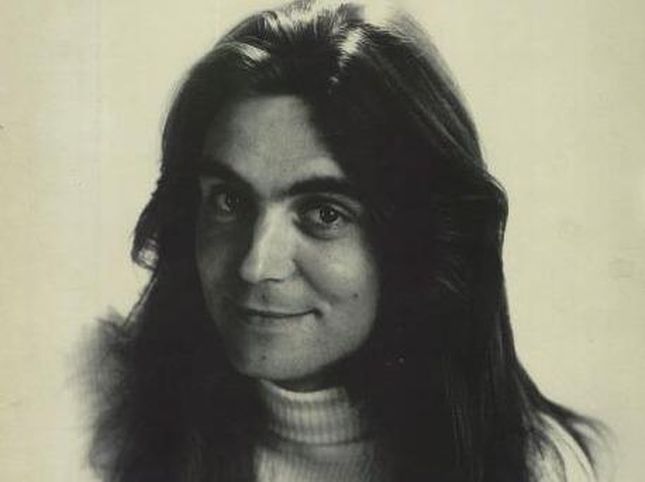
Terry Reid, the singer who refused Led Zeppelin died
Terry Reid died, the singer who in 1968 refused to become the voice of the Led Zeppelin, one of the most iconic bands in the history of rock. Having become a cult musician also by virtue of that refusal, Reid died after a long battle against cancer: he should have performed as headliner at the St. Ives September Festival on September 18, but his conditions had rushed. Until his death, which occurred today at the age of 75.
At the beginning of July, the artist had had to suspend his appearances from live precisely because of the disease: “Due to health problems deriving from recent care for cancer, Terry had to postpone his autumn tour of 2025 in the United Kingdom, Ireland and Norway – we read in a note released by his entourage – Terry is particularly sorry for this, given that his 2024 tour had a huge success and did not see a huge success and did not see a huge success. The time to play in new cities and clubs, as well as in old favorite places, in addition to his first dates in Norway “. After the news of the postponement of the musician’s tour, the closest people to him had launched a fundraiser on Gofundme to help Reid, in economic difficulties, to face medical expenses.
Born in 1949 in Huntingdon, a hundred kilometers from London, Reid left the school very young to pursue his dreams of Rock’n’roll: he was just fifteen when together with his group, the Jaywalkers, he embarked on tour with the Rolling Stones, opening between September and October 1966 the concerts of the British tour of Mich Jagger and associates, Having sent their latest album “Aftermath” in the shops. It was precisely during one of the concerts of the tour that Terry Reid and his Jaywalkers were spotted by Graham Nash, who helped the band to sign his first record contract with Columbia Records and to make his debut shortly thereafter on the market with the single “The Hand Don’t Fit the Glove”: it was the first and the last, since the formation was dissolved in 1967. Reid continued his way, affecting his debut album as a soloist, “Bang, Bang You’re Terry Reid”. The album came out in 1968, but remained practically to take dust on the shelves of the shops: nevertheless, the name of Reid has contributed a lot among the followers of the rock scene of the time, so much so that in that same year the singer -songwriter was proposed to go on tour in the United States with Cream.
Terry Reid’s music therefore also reached the ears of the then guitarist of the Yardbirds Jimmy Page, who tried in every way to get in touch with the singer -songwriter. As soon as the Yardbirds melted, the guitarist asked Reid to become the singer of the group he was about to found, the New Yardbirds, the future Led Zeppelin. The singer -songwriter took time: shortly thereafter he would have left with the Rolling Stones to accompany them again on tour and Cream had confirmed that they wanted it by their side. Was it worth accepting that proposal? According to official history, Reid told Page that he would only accept if the latter had paid the penalties relating to the failure to comply with the agreements he had taken with the Stones and if he had called Keith Richards to explain the situation. But it did not happen: Page did not call Richards, did not pay the penalties and put himself in search of another singer. He remembered that such Robert Plant of Birmingham, at the head of a band, the Band of Joy, who had known a short time before.
And so, while in 1969 the Led Zeppelin sent their first two albums, “Led Zeppelin” and “Led Zeppelin II” in the stores, with the voice of Robert Plant to make famous songs such as “Good Times, Bad Times”, “Communication Breakdown”, “Whole Fight Love”, “Ramble Rock”, just to name a few, Terry Reid – Year published his second album, entitled Eponimo – witnessed by spectator to the climb to the success of the group, while he was busy opening the tours of groups such as Jethro Tull and Fleetwood Mac.
The singer -songwriter would have continued to affect records also in the following years, but without particular success: from 1973 “River” to “The Driver” of 1991, passing through 1976 “Seed of Memory” and “Rogue Waves” from 1979. In 2016, in an interview with British music magazine Uncut, of the “great refusal” said:
“People say: ‘You could have been Robert Plant’, but I would have been Terry Reid anyway. I am a singer, I play the guitar, I write the songs in my own way. Jimmy (Page) knew exactly what he wanted”.